If water is coming up now
- Turn the water off at the stopcock, usually under the kitchen sink, in a cloakroom or where the supply enters the house.
- If the boiler pressure is falling too, switch the heating off at the boiler.
- If water is near sockets, appliances or a light fitting, switch off that circuit at the consumer unit, or the whole supply if you are unsure, and keep away from wet electrics.
- Move furniture and rugs off the wet area and take photos before anything is cleaned up. Your insurer may want them.
Check 1: the water meter
This tells you whether water is escaping from the supply side: the cold main, the cold and hot water pipes.
- Find your meter. It is usually in a pavement or driveway chamber, sometimes inside near the stopcock.
- Turn off every tap and every water-using appliance. Make sure no toilet is filling and no outside tap is running.
- Note the reading, including the small red dials or digits.
- Wait 30 minutes without using any water, then read it again.
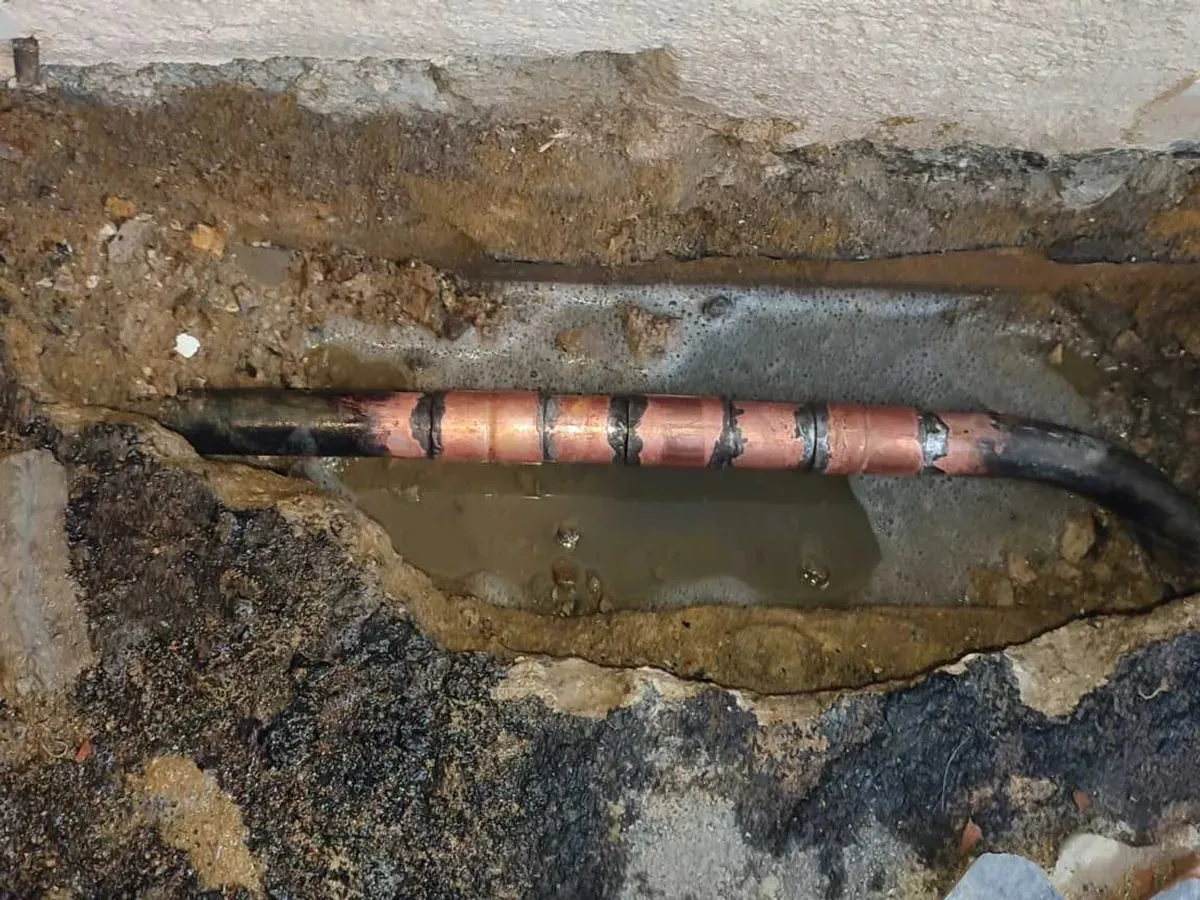
If the reading has moved, water is escaping somewhere. If you then close the stopcock inside the house and the meter still moves, the leak is on the underground supply between the meter and the house. If it stops, the leak is inside, which includes pipes in the floor.
Check 2: the boiler pressure
This tells you about the heating side, including wet underfloor heating.
- With the system cold, note the pressure on the boiler gauge. Most sealed systems sit around 1 to 1.5 bar; your boiler manual gives the right figure.
- Write down the reading each morning, and every time you top up.
- Check under the pressure relief valve pipe outside for drips, and check every radiator and valve with a dry tissue.
If the pressure falls steadily and there are no drips at the boiler, radiators or relief pipe, the heating is probably leaking somewhere hidden. More on pressure loss.
Check 3: narrow it down
If your system has isolation valves you can go one step further, without draining anything:
- Underfloor heating: at the manifold, each loop usually has a valve or actuator. Closing the underfloor heating off from the boiler and watching whether the boiler still loses pressure tells you whether the loops are involved. Only do this if you are comfortable with the controls; closing the wrong valve can stop the boiler circulating.
- Hot water: on an unvented cylinder or a combi, a leak on the hot side often shows as warm damp or a warm floor. Turning the hot water off for a while and watching the meter can help separate hot from cold.
The engineer does this properly with gauges on each section, but a rough answer from you helps the phone call.
Check 4: look where you can
- Kitchen and bathroom kick-boards: pull them off and look under the units with a torch.
- The underfloor heating manifold cupboard: look for drips, crust and salts.
- Around the boiler, cylinder and any pipe that goes into the floor.
- Outside: the ground above the supply pipe, the relief valve pipe and any gully that is running when it should not be.
- Under a loose board or an access hatch with a torch or phone camera.
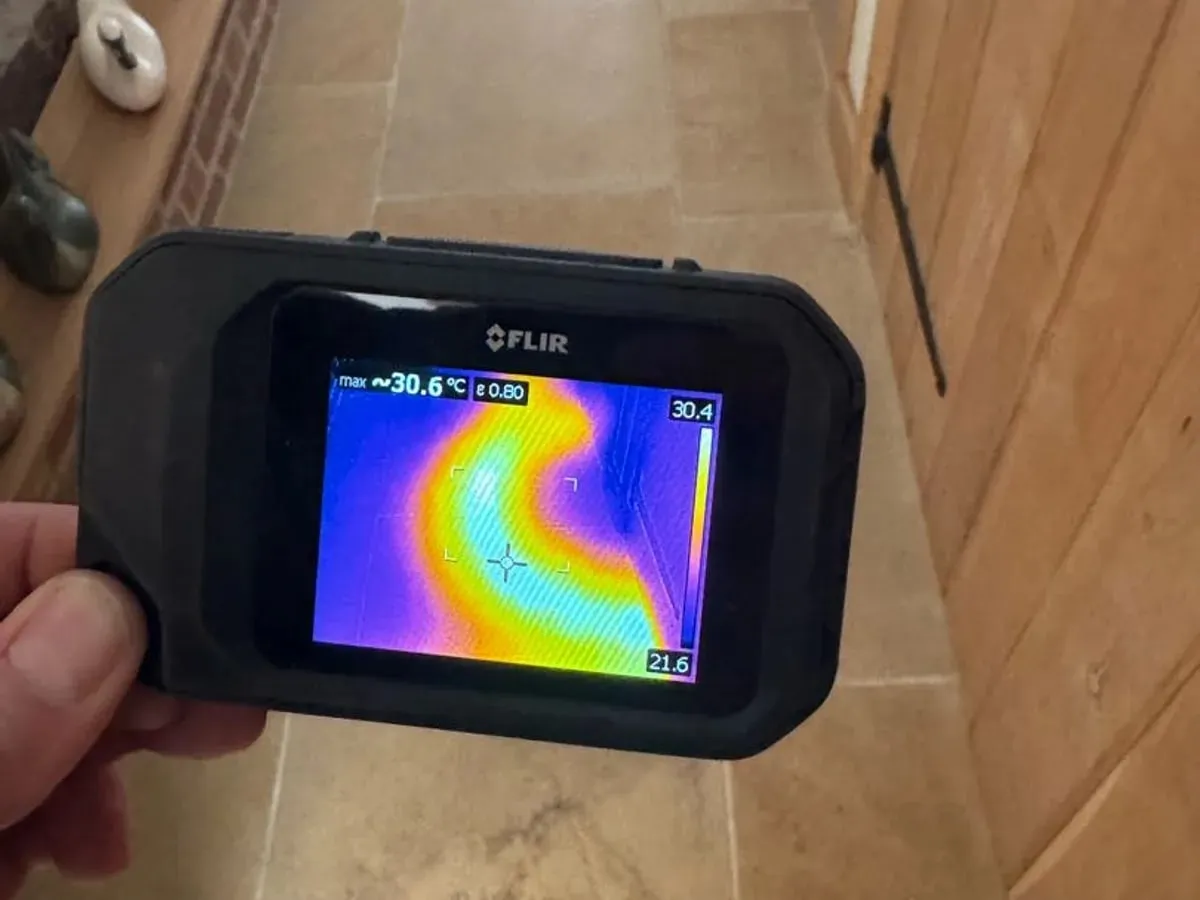
A thermal camera attachment for a phone can show warm pipes in a floor, but reading the image correctly takes practice. Heating pipes, sunlight and rugs all make patterns that look like leaks.
What not to do
- Do not start digging where the damp is. Water travels, and the wet patch is often not above the leak. Breaking concrete or lifting tiles in the wrong place makes more to repair.
- Do not screw or nail into the floor to lift it. That is how many underfloor pipes get damaged in the first place.
- Do not keep filling the heating if it is losing pressure fast. Each top-up adds more water to the floor.
- Do not rely on a leak sealer to solve it.
When to call
Call when the meter or the boiler shows a leak you cannot see, when water is coming up through the floor, or when damp keeps returning after you have ruled out the obvious. Tell the office what the checks above showed; it makes the survey quicker to plan. What the survey involves.