“He used technology including a thermal camera.”
Underfloor leak detection equipment
Every instrument answers one question, and every one can be fooled by what is under a floor. That is why the engineer carries all of them and only recommends opening the floor where they agree.
The photos on this page were taken by ADI engineers on the jobs linked beside them.
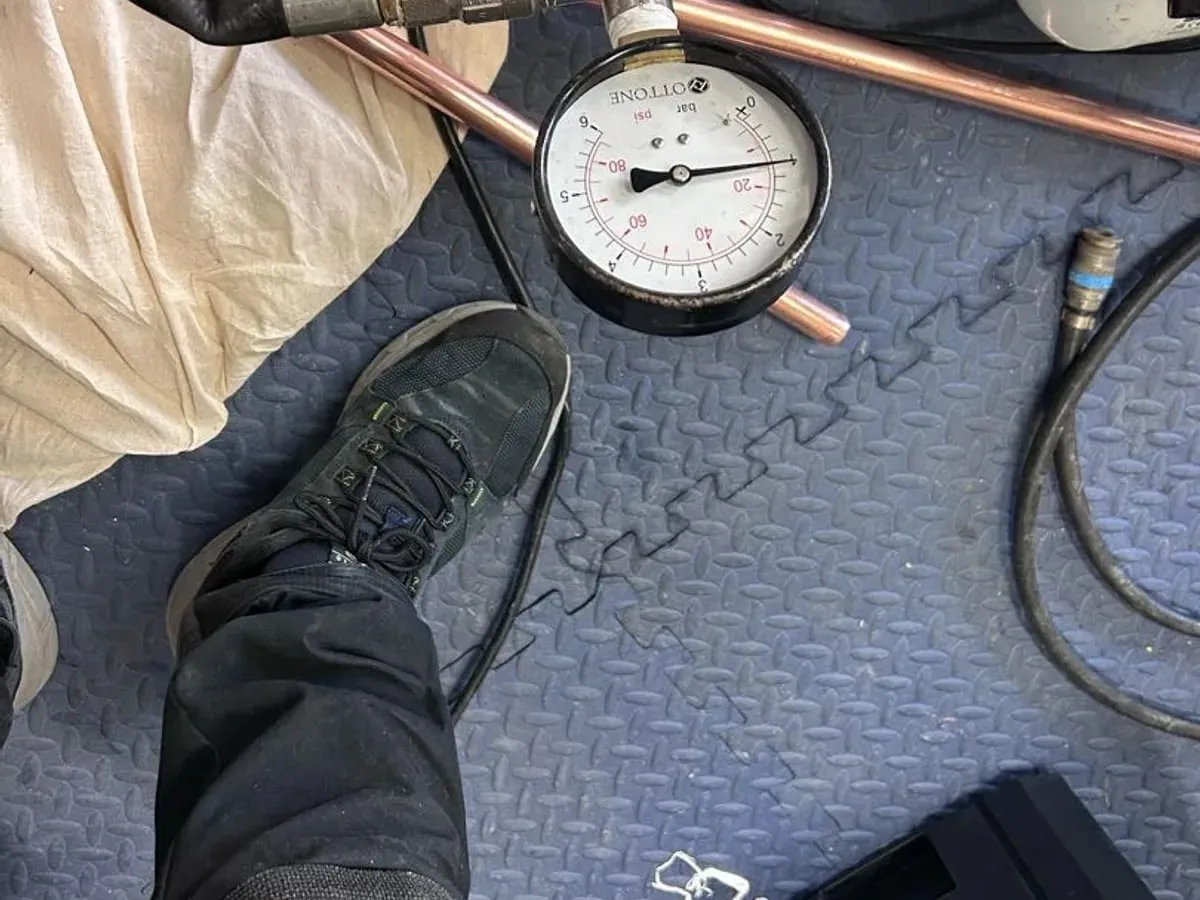
Pressure testing and isolation
Is there a leak, and which pipe is it on?
The engineer isolates one part of the system at a time, such as a single underfloor heating circuit at the manifold, the hot supply or the cold supply, and pressurises it with water or air.
A gauge that holds steady clears that section. A gauge that drops puts the leak on that pipe.
Where it helps most
- Underfloor heating with many circuits on a manifold
- Houses where heating, hot and cold pipes share the same floor
- Confirming a repair has worked before the floor goes back
Where it can mislead
- It tells you which pipe, not where along it. Other methods then find the spot.
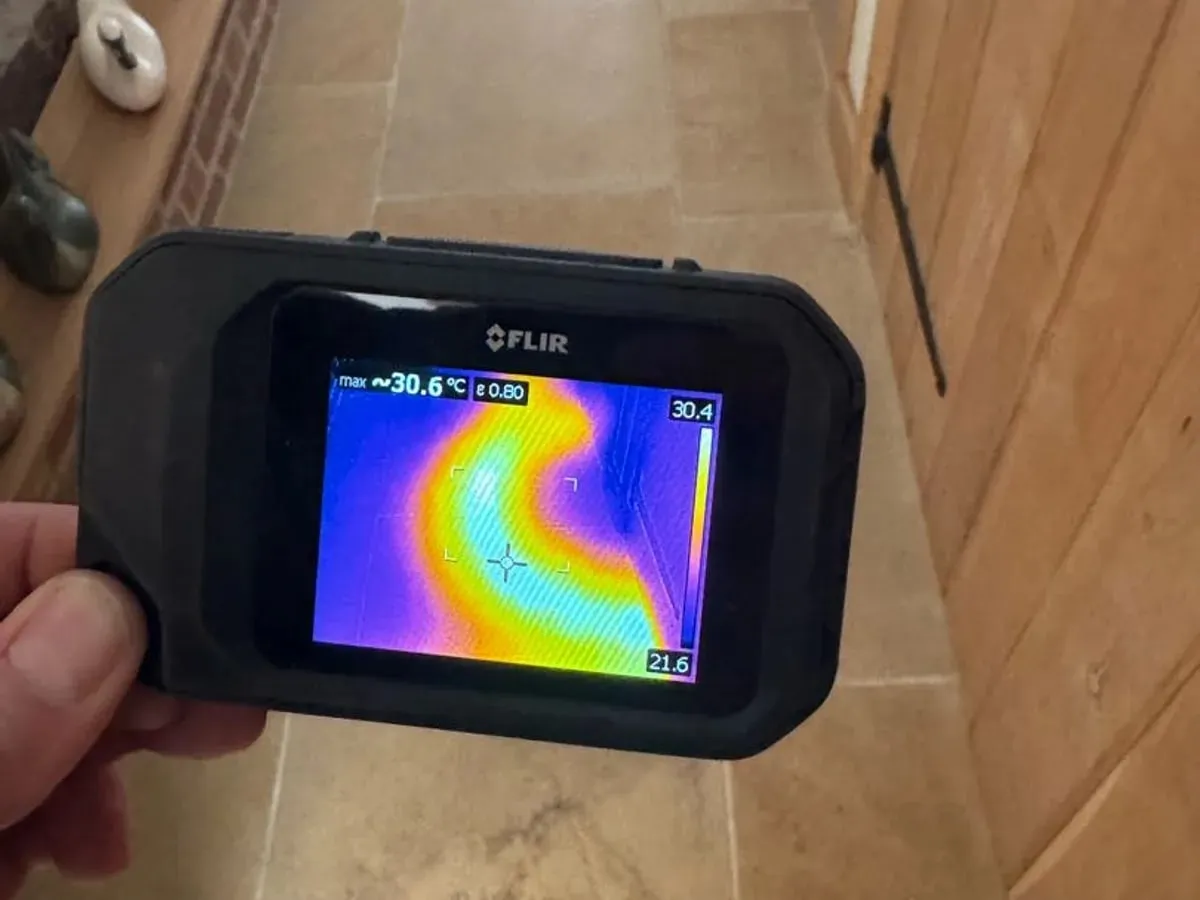
Thermal imaging camera
Where do the pipes run, and where is warm water spreading?
A thermal camera shows surface temperature as colour. Warm pipes in a floor show as lines, and warm water escaping shows as a patch that spreads away from the line.
On heating and hot water pipes the system is run so the pipes are warmer than the floor. On a new floor with no boiler, hot water can be run through by hand, as on the Nottingham job.
Where it helps most
- Mapping underfloor heating loops before anything else
- Heating and hot water leaks in screed and concrete
- Spotting a heat patch under tiles, laminate or wood
Where it can mislead
- It needs a temperature difference. Cold water pipes show poorly unless the floor is warmer than the water.
- Underfloor heating makes its own warm patterns, which can look like a leak. Readings are checked against the other methods.
- Thick rugs, deep screed and sunlight on the floor all blur the picture.
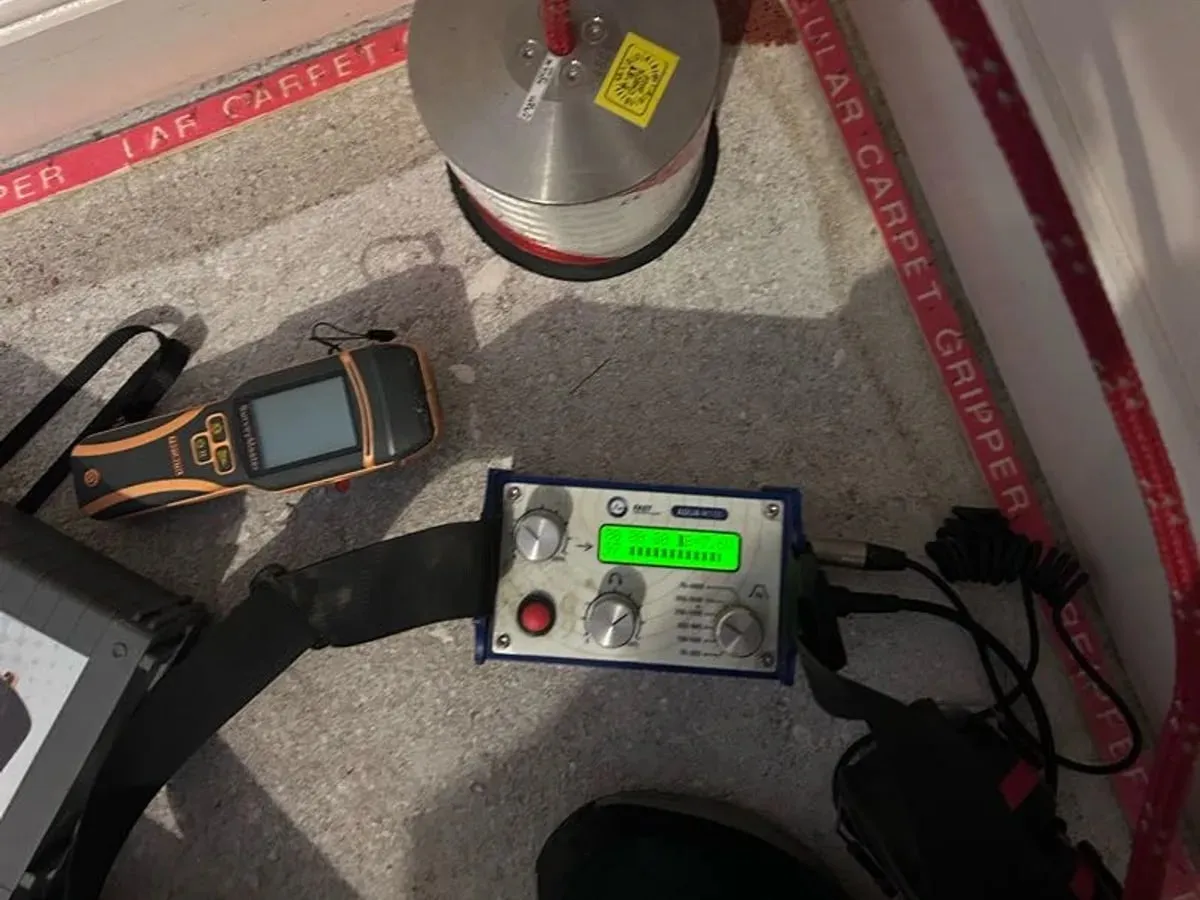
Acoustic listening equipment
Can we hear water, or air, escaping at one spot?
Water escaping from a pressurised pipe makes a noise. A ground microphone on the floor surface amplifies it, and the engineer moves across the floor until the sound is loudest.
When a system is tested with air, as in Marlborough, the escaping air can be followed the same way.
Where it helps most
- Pressurised supply pipes under solid floors
- Following an air test on heating pipes
- Narrowing an area already picked out by gas or thermal readings
Where it can mislead
- Sound travels along pipes. On underfloor heating laid in a ring it can seem to come from the wrong place.
- Traffic, pumps, fridges and soft floor coverings all make listening harder.
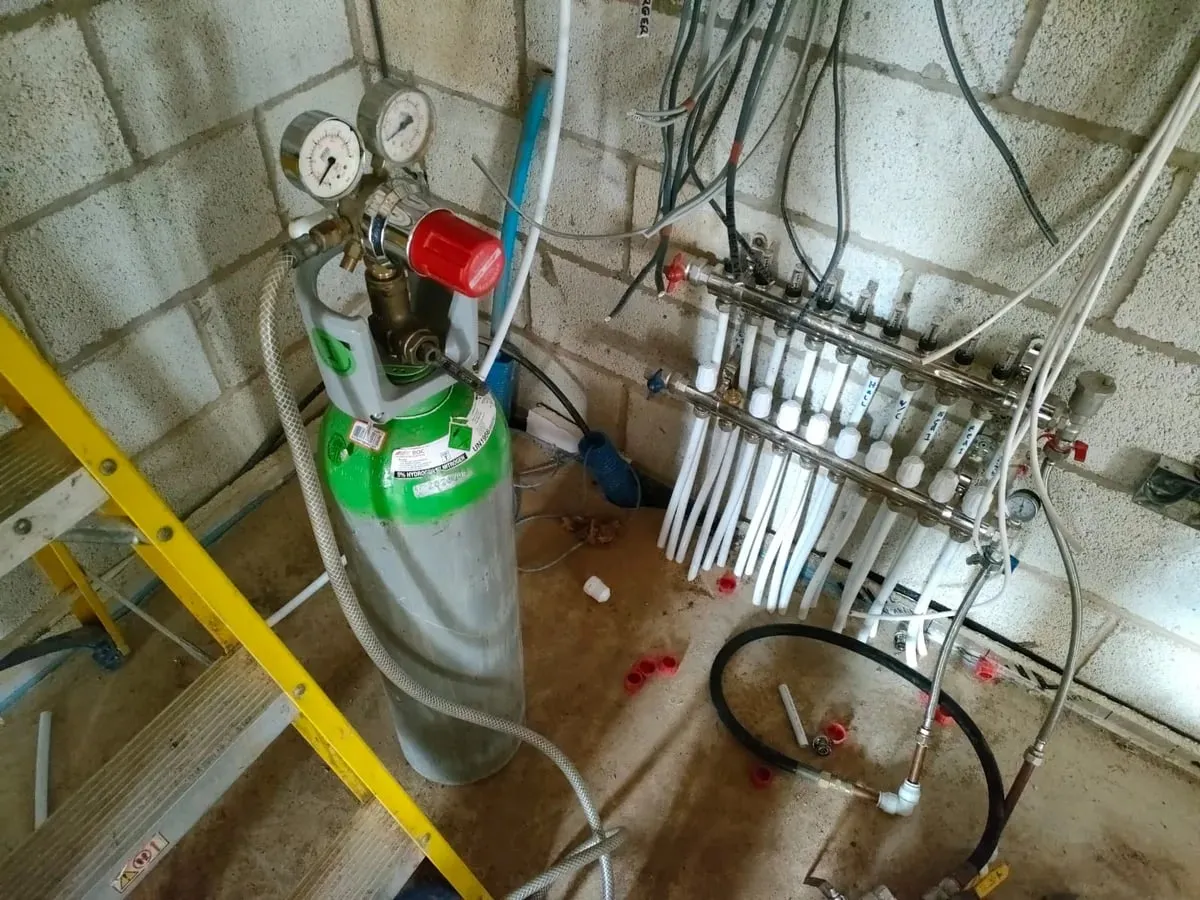
Tracer gas
Where is gas coming up through the floor?
The pipe is drained and filled with a safe mix of hydrogen and nitrogen. Hydrogen is a very small molecule, so it escapes through the same hole as the water and works its way up through screed, concrete and joints.
A hydrogen sensor is moved slowly across the floor. The strongest reading marks the leak.
Where it helps most
- Leaks with no water showing at the surface
- Heating pipes in screed
- Confirming a spot before any floor is lifted
Where it can mislead
- Gas takes the easiest path. In Nottingham it ran along a channel beside the pipes and came up at the edge of the room.
- Sealed floor finishes slow it down, so the engineer tests at joints, edges and kick-boards.
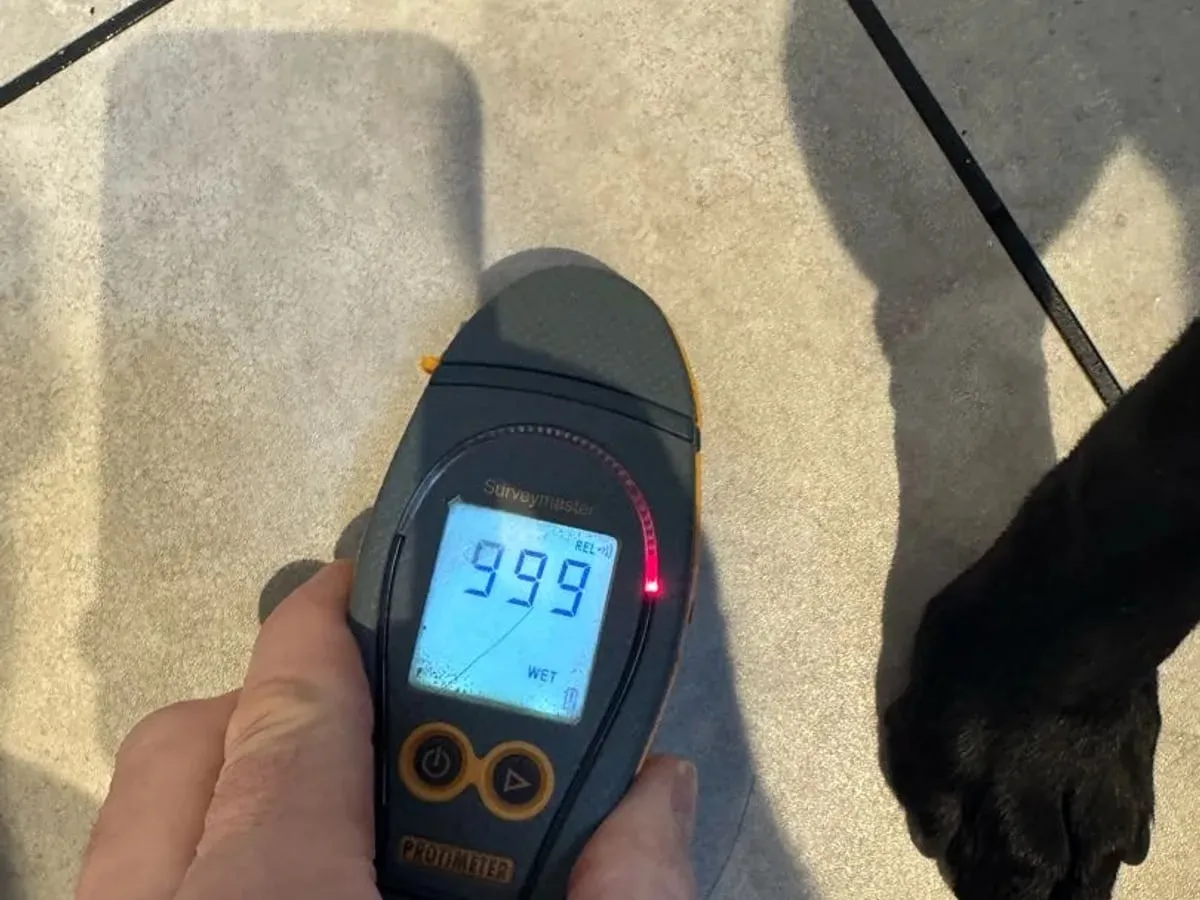
Moisture and damp meters
Where is the floor wet, and how far has it spread?
A moisture meter measures how wet a surface is, without damaging it. Readings are taken across the floor, skirting and walls to map where the water has gone.
Some meters show a relative scale that tops out at 999. That reading means very wet, not a measured amount of water.
Where it helps most
- Mapping how far water has spread before and after the repair
- Telling the leak site from water that has travelled
- Recording readings for a report
Where it can mislead
- Water travels under floors, so the wettest spot is not always above the leak.
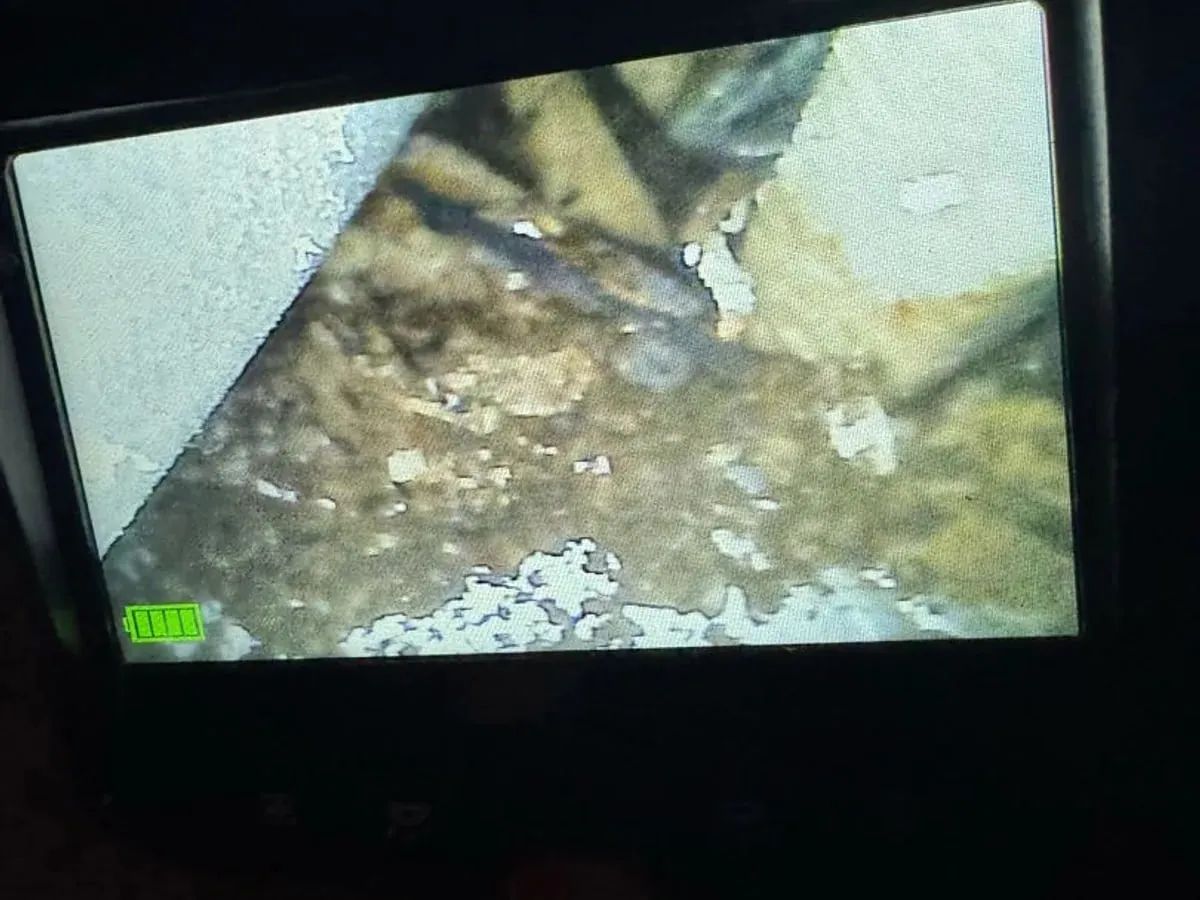
Endoscope and borescope cameras
What does it look like under there?
A small camera on a flexible lead goes through a gap, a small hole or a lifted board to look at pipes, joints and voids without opening up more floor.
Where it helps most
- Suspended timber floors
- Pipe channels and ducts
- Confirming a fault before a repair is planned
Where it can mislead
- It needs a way in, and it only shows what the lens can reach.
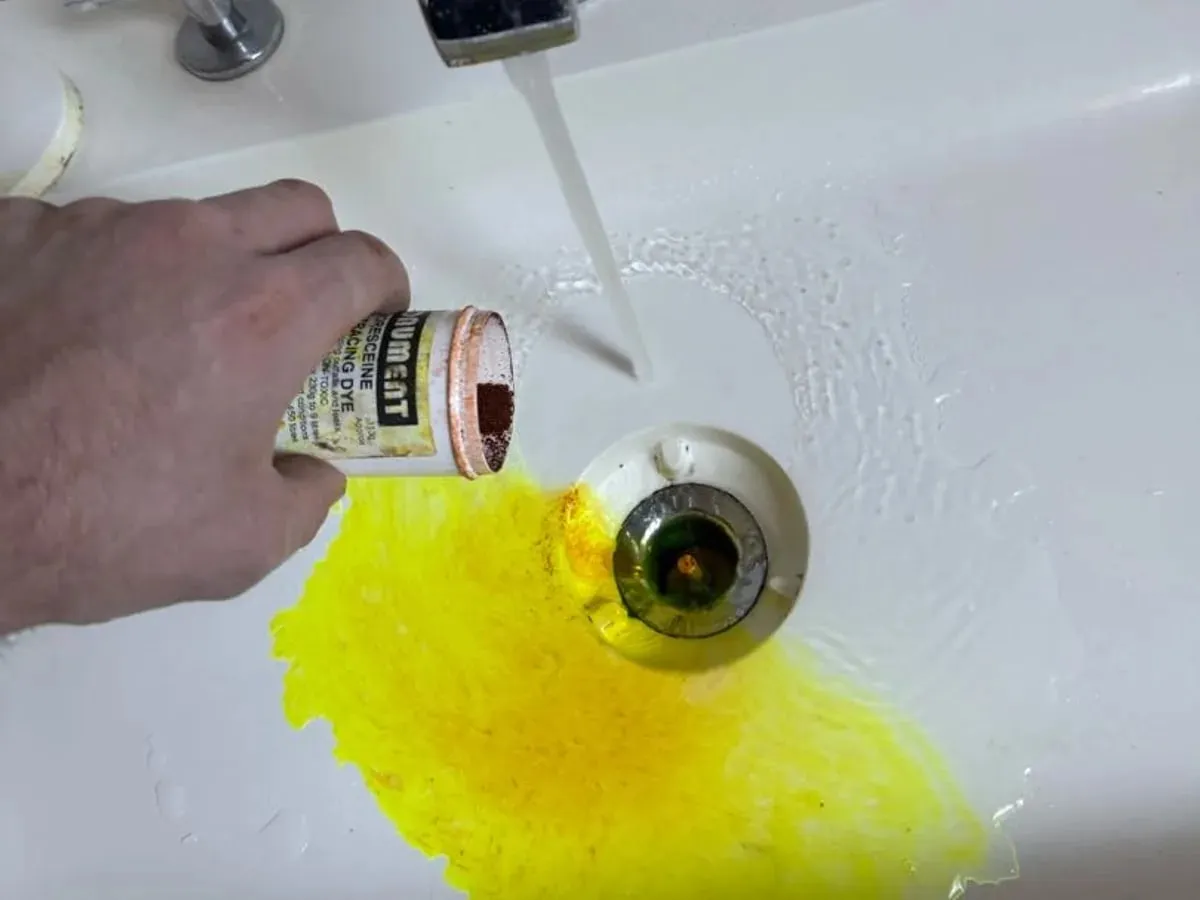
Flow metering and leak dye
How much is escaping, and is it the drains?
A meter test with everything turned off shows how fast water is being lost. In Burnham-on-Crouch it was 80 to 150 litres an hour.
Coloured dye put into waste pipes shows whether a drain is involved. In Battle no dye appeared, which ruled the waste pipes out.
Where it helps most
- Supply leaks on a metered property
- Ruling drains and waste pipes in or out
Where it can mislead
- Neither finds the exact spot. They decide where the search goes next.
Why the readings have to agree
On our Nottingham job, acoustics picked up noise across the whole area because the pipes ran in a ring, and tracer gas came up at the edge of the room because it had found a channel in the screed. Thermal imaging then showed the pipes were not where anyone thought.
Had the floor been opened on the first reading, it would have been opened in the wrong place. One reviewer, told by two plumbers to pull up their LVT flooring, described watching “four different instruments confirming his findings” before the engineer lifted as little floor as possible. That is the standard: several methods, one spot.
Read the Nottingham caseCustomers on the equipment
“Two plumbers couldn't find and suggested I pull my LVT flooring up.”
“Frank came out and used tracer gas to identify the location of the leak.”