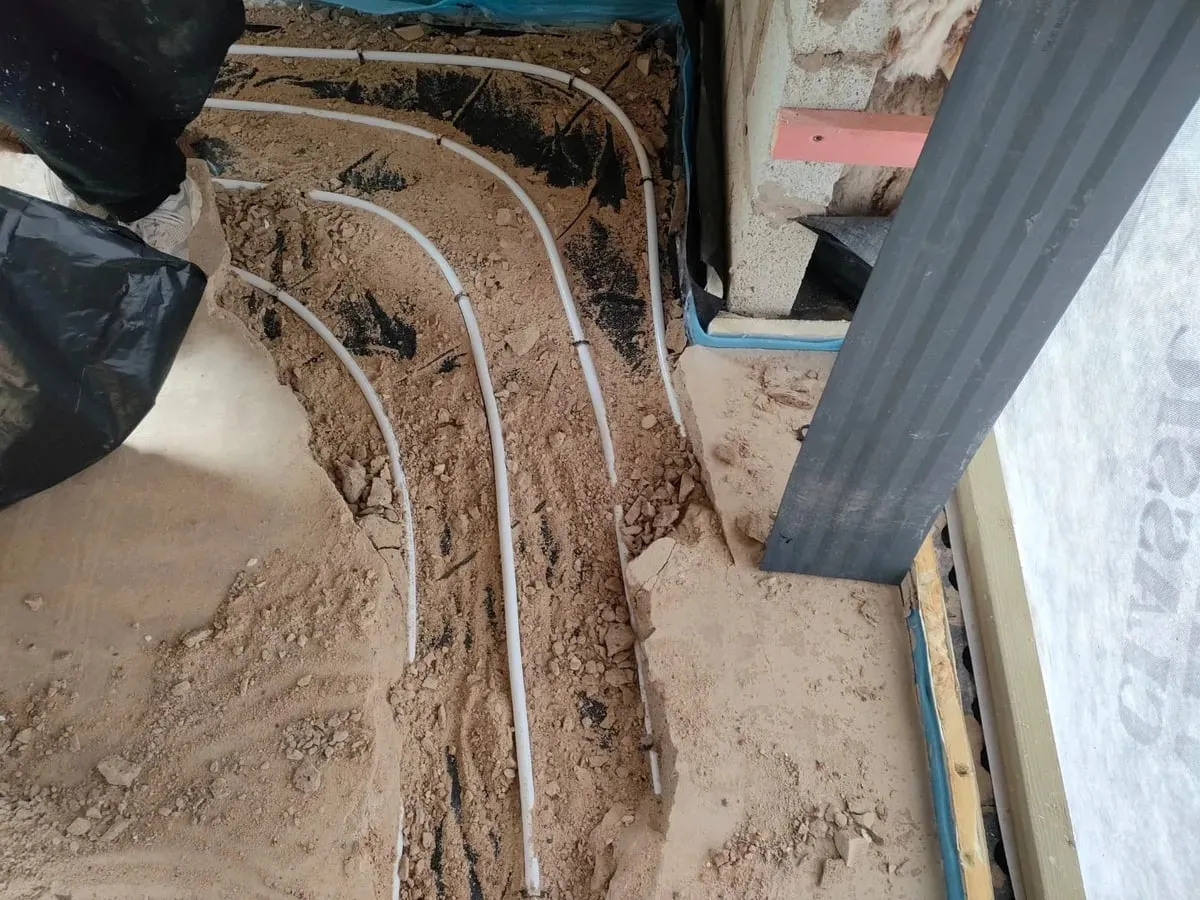
How an underfloor leak survey works

The survey starts wide and narrows down: which system is leaking, which pipe, where that pipe runs, and then the one spot on it. The floor is only opened when the readings agree and you have seen where and why.

Call 0333 567 2639

Monday to Friday, 7:30am to 6:30pm. The office will explain how the survey would work at your property.

Excellent 4.7 out of 5 from 1,618 reviews of ADI Leak Detection on Trustpilot (opens in a new tab)

Step by step

  1. The phone call

    You describe what you are seeing, the floors, the heating and anything you have already checked. The office explains how the survey would work at your property and books a date. Lines are open Monday to Friday, 7:30am to 6:30pm.

  2. Arrival and a look round

    The engineer asks what has happened, looks at the damage, the boiler, the manifold, the stopcock and the meter, and works out which systems run under the affected floor.

  3. Which pipe is leaking

    Each system is isolated and pressure tested: underfloor loops one at a time, radiator circuits, hot and cold supplies. A gauge that drops identifies the leaking pipe. This step often clears the underfloor heating.

  4. Where the pipe runs

    Thermal imaging maps heating and hot water pipes through the floor. Where there is no heat, the route is worked out from the fittings, the gas readings or the layout.

  5. The spot on the pipe

    Tracer gas, acoustic listening and moisture readings are used over the pipe route. The engineer keeps going until the methods agree on one place, and explains what each one showed.

  6. Agreeing to open the floor

    Before anything is lifted, the engineer shows you the spot and explains what opening it involves for your floor finish. Nothing is broken without your agreement.

  7. Exposing and repairing the leak

    The floor is opened at the marked spot. Where it can be done on the day, the pipe is repaired, the system retested and refilled. If it needs another visit or another trade, you are told why.

  8. The report

    You get a written report of the investigation: what was tested, what was found and where, and any recommendations. It can be sent to your insurer or loss adjuster.

How to prepare

  • Clear furniture, rugs and anything stored on the floors involved, and in front of the boiler, manifold and stopcock.
  • Find out where the water meter is and make sure it can be reached.
  • Have any drawings, photos from when the floor was laid, or notes from earlier plumbers ready.
  • If you are claiming on insurance, have the claim reference to hand.
  • Ask the office whether to have the heating running before the visit. Warm pipes are easier to trace with a thermal camera, but a fast leak may mean keeping it off.

How long it takes

An engineer is booked for the day. Some leaks are found in the first couple of hours; large systems, pipes laid in rings or channels and leaks that have spread widely take longer, because each reading has to be checked against another before the floor is opened.
Surveys in practice

Published ADI Leak Detection jobs, with the engineer’s own photos. All case studies.

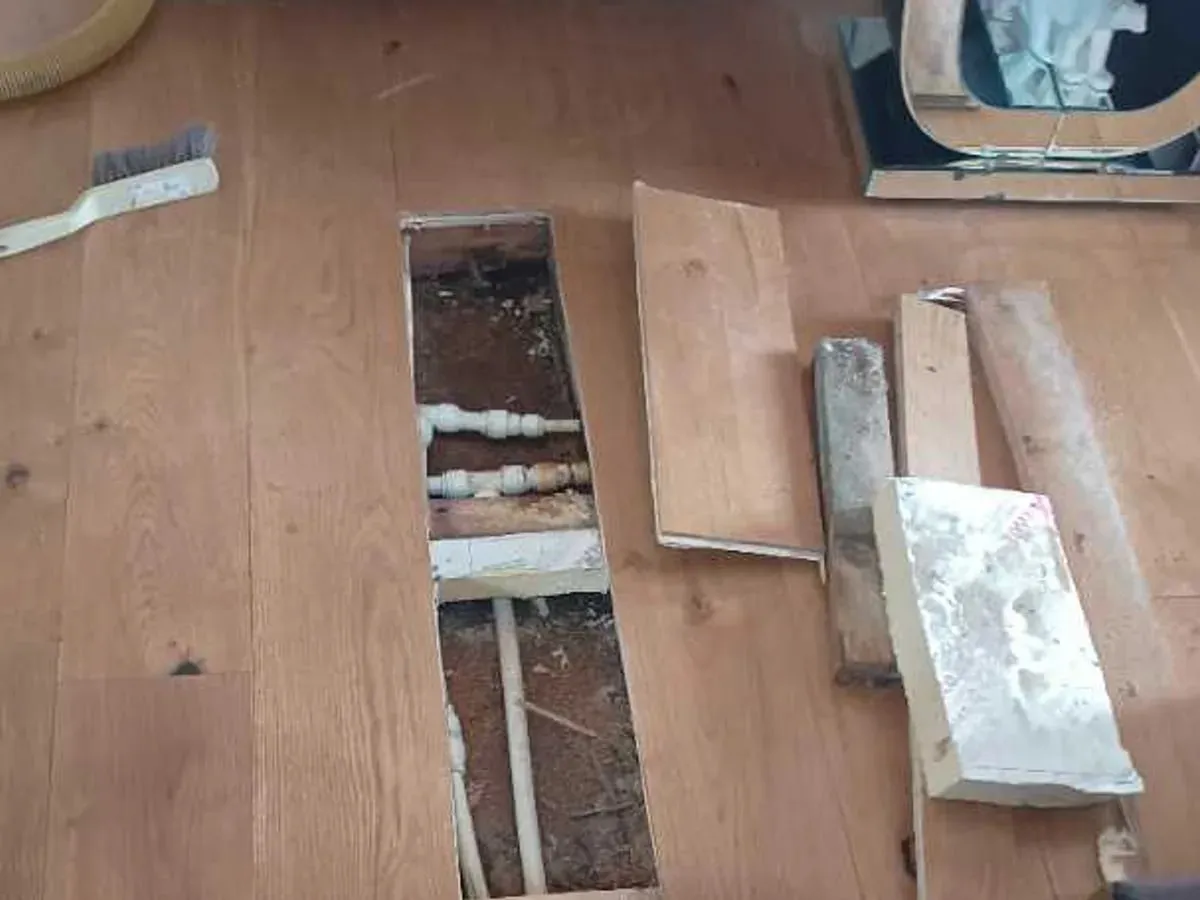
  • Beccles, Suffolk. Underfloor heating, Floorboards

    Two manifolds, fourteen zones, no visible leak

    With fourteen underfloor zones, the heating was the natural suspect. Testing each section showed the underfloor circuits were sound and the leak was on the radiator pipework.

    Leak found on radiator pipework; fitting replaced; retest passed

  • Burnham-on-Crouch, Essex. Underfloor heating, Screed floor

    Salts in the manifold cupboard, paving collapsing outside

    It looked like an underfloor heating leak. Isolation testing put it on the water softener bypass instead, and thermal, acoustic, tracer gas and moisture readings all pointed to one threshold.

    Leak found at the kitchen threshold; copper pipe replaced; retest clear

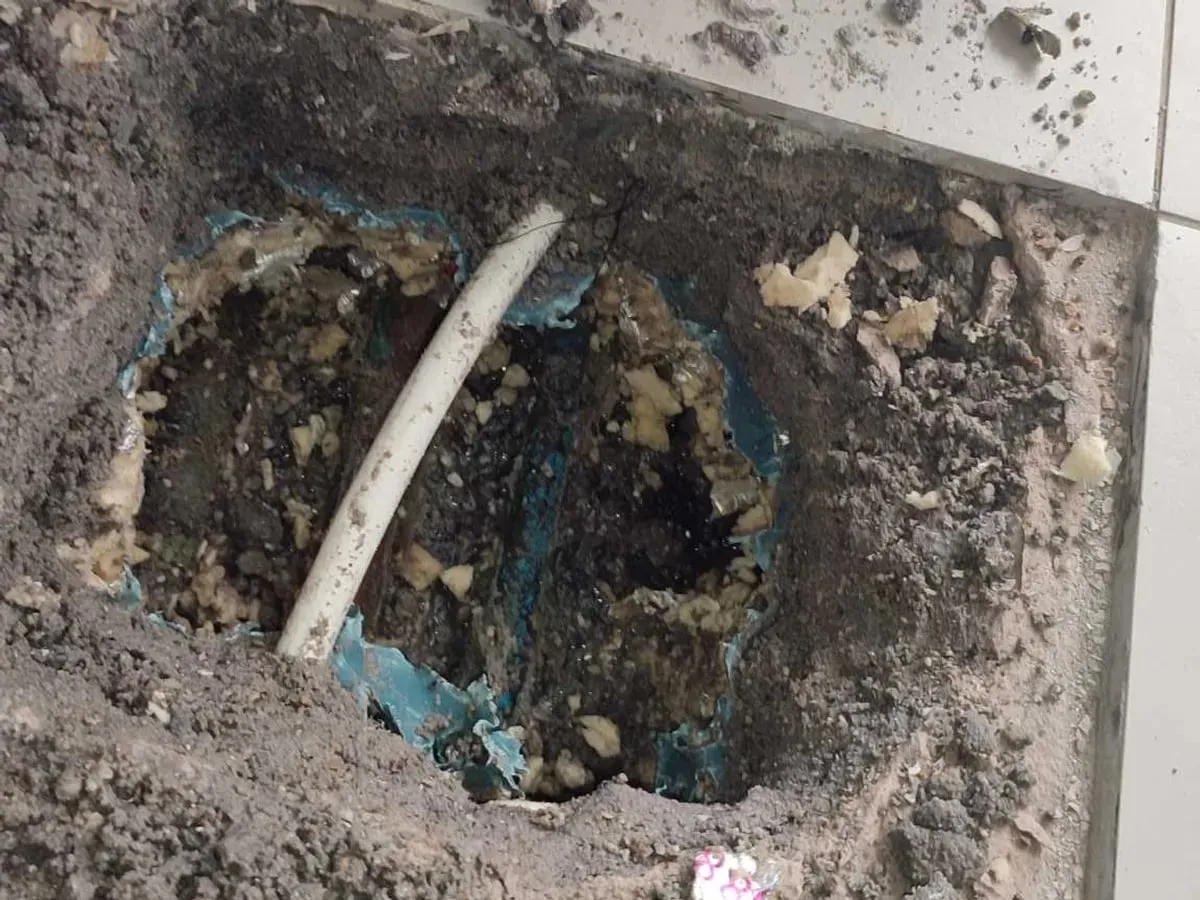
  • Nottingham, Nottinghamshire. Underfloor heating, Screed floor

    Leak in underfloor heating pipes under new screed

    Acoustics and tracer gas were both misled by the way the pipes were laid. Warm water and a thermal camera showed the real pipe route and a faint mark at the leak.

    Leak located; repaired by the site plumbers

Customers on the day itself

Reviews of ADI Leak Detection on Trustpilot, quoted word for word. More reviews that mention floors.

Questions people ask

More answers on the questions page.

Do I need to be at home, and what should I get ready?

Someone needs to let the engineer in and be around to agree before any floor is opened. It helps to clear furniture from the rooms involved, know where the stopcock, boiler and underfloor heating manifold are, and have any drawings or photos from when the floor was laid.

How long does an underfloor leak survey take?

An engineer is booked for the day. Some leaks are found in a couple of hours; complex systems with many circuits take longer. Reviews on this site mention both.

How accurate is it?

Accurate enough to open a small area, when the methods agree. Every instrument can be misled on its own: sound travels along pipes and gas follows gaps in the screed. The engineer does not recommend opening the floor until the readings point to the same place.

Can you repair it on the same visit?

Often, yes. The engineers are plumbers and many of our cases were repaired on the day. Sometimes a repair has to wait, for example when the pipe needs a different fitting, the floor needs specialist lifting, or another trade has to be involved.

Will you put the floor back?

The engineer makes the opened area safe and tidy and, where it is a small patch, can make it good. Wet screed and subfloors usually need to dry before the final floor finish goes back, and tiles or wood flooring are normally reinstated by a flooring fitter. Ask on the phone what is included for your floor.

Call 0333 567 2639

Mon to Fri, 7:30am to 6:30pm