What the gauge should read
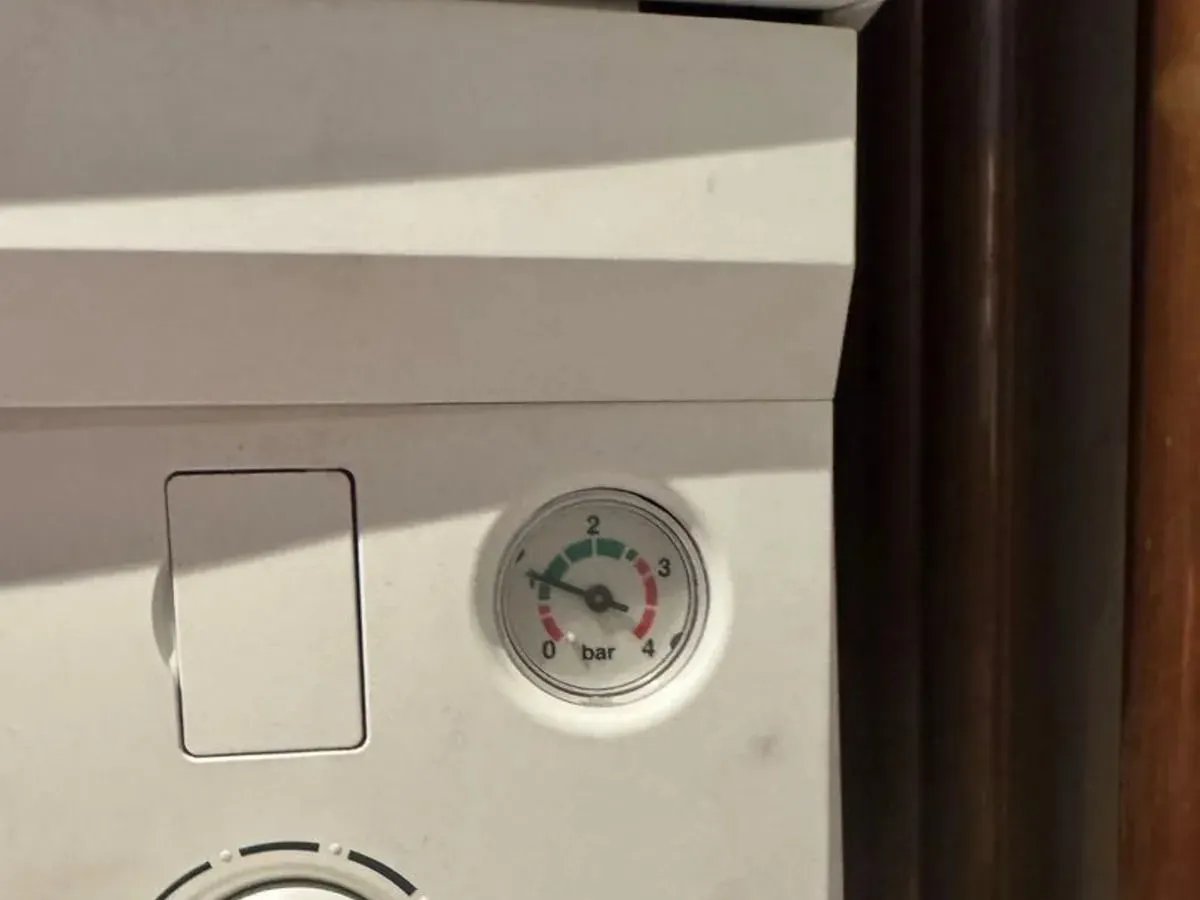
Most sealed heating systems with a combi or system boiler sit at around 1 to 1.5 bar when cold and rise a little when hot. The boiler manual gives the figure for yours. A system that stays near that level for months is fine. One that needs topping up every week, every day or, as on our Torquay job, every three to four hours, is losing water.
Causes that are not a floor leak
Before looking under the floor, rule out the parts that can lose pressure without a hidden leak. A Gas Safe registered engineer should check anything inside the boiler.
- The pressure relief valve. It lets water out of a small copper pipe, usually through the wall outside. A drip or damp mark under that pipe means the valve is opening. It can be caused by over-filling or a failed expansion vessel.
- The expansion vessel. If it has lost its charge, pressure rises sharply when hot and the relief valve lets water out.
- Radiator valves and joints. Check every radiator, towel rail and valve with a dry tissue.
- The boiler itself. Internal leaks happen. On one of our reviews, the customer’s plumber confirmed the boiler was working normally before they called ADI about a leak.
- The filling loop left slightly open, or a cylinder coil leaking into the hot water.
Signs it is under the floor
If the boiler and radiators are sound, a buried pipe becomes the main suspect. It is more likely if:
- Your heating pipes are not visible downstairs, which usually means they run in the floor.
- There is a warm patch on a floor, or a floor that feels warmer since the problem started.
- Laminate or wood has buckled, or there is damp at the skirting.
- You have underfloor heating, or radiators that were moved or removed in the past. In Torquay a radiator taken out years ago had left live pipes under the kitchen.
Sometimes there is nothing to see at all. In Burnham the heating was losing pressure and the kitchen floor looked and felt normal; the pipe had failed inside the screed.
What to do in the meantime
- Top up only to the normal cold pressure. Over-filling can make the relief valve open.
- If you are topping up very often, turn the heating off and use other heat until it is traced. Every top-up adds fresh water and oxygen to the system, and the escaping water is soaking into the floor.
- Do not rely on a leak sealer. It will not show where the water has gone.
- Note how often you top up and what the gauge reads. It helps the engineer judge how fast the leak is.
How the leak is traced
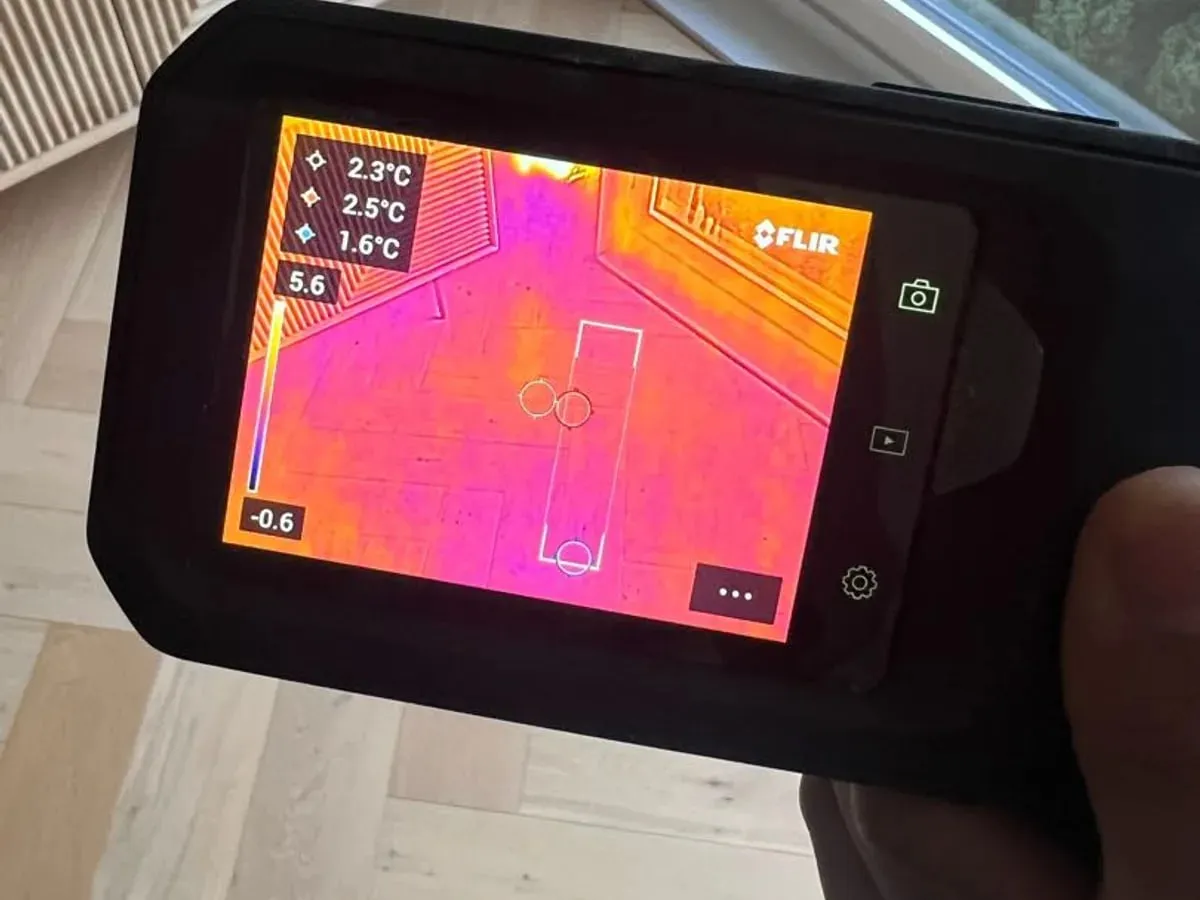
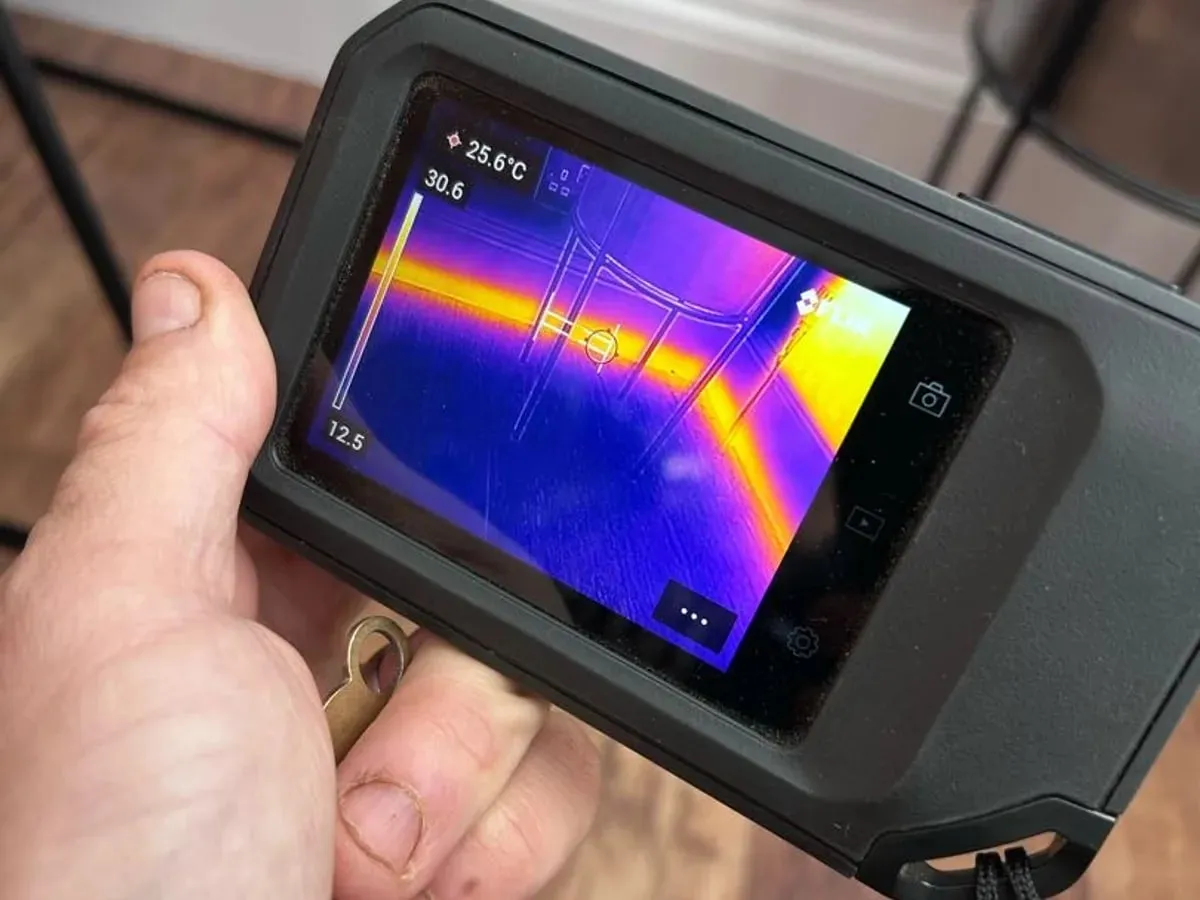
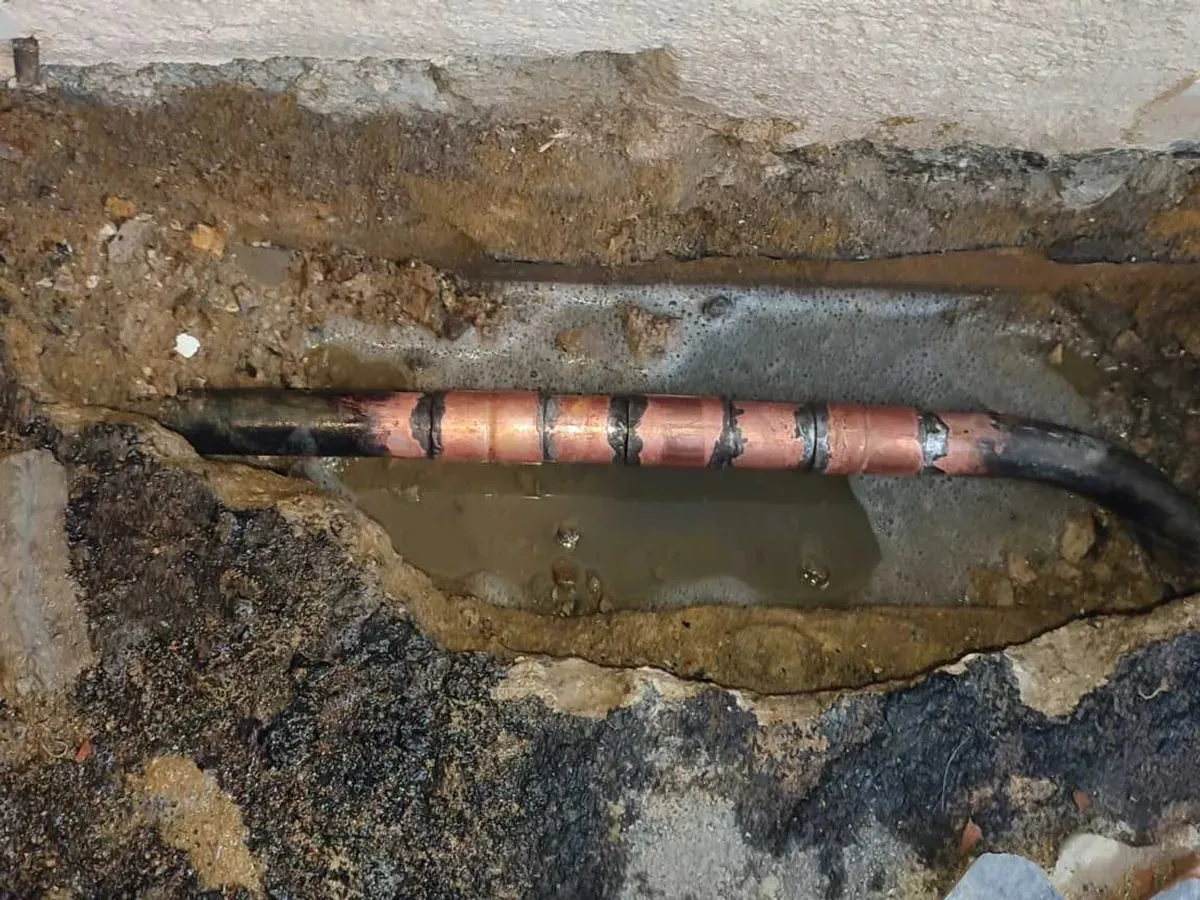
The engineer splits the heating into sections, such as the underfloor loops, each radiator circuit and the boiler, and pressure tests each one. That finds which part is leaking. Then thermal imaging maps the pipe runs while the system is warm, and tracer gas, acoustic listening and moisture readings pinpoint the spot on the pipe.
After the repair the system is refilled, inhibitor is added and the pressure is watched to make sure it holds. What happens on the day.