Hidden leak in a home with underfloor heating throughout, Battle
With underfloor heating everywhere, the heating looked like the obvious suspect. Testing each supply in turn showed the leak was on a hot water T-piece behind a boiler room wall.
- Location
- Battle, East Sussex (TN31)
- Property
- Residential property
- System
- Underfloor heating in screed under tiles, plus hot and cold supplies in a channel under a plastic membrane
- First sign
- Water meter moving every two minutes with no water in use
- Engineer
- Grant Corney, ADI Leak Detection
- Outcome
- Leak found on the hot supply; fitting replaced; retest held
What was happening
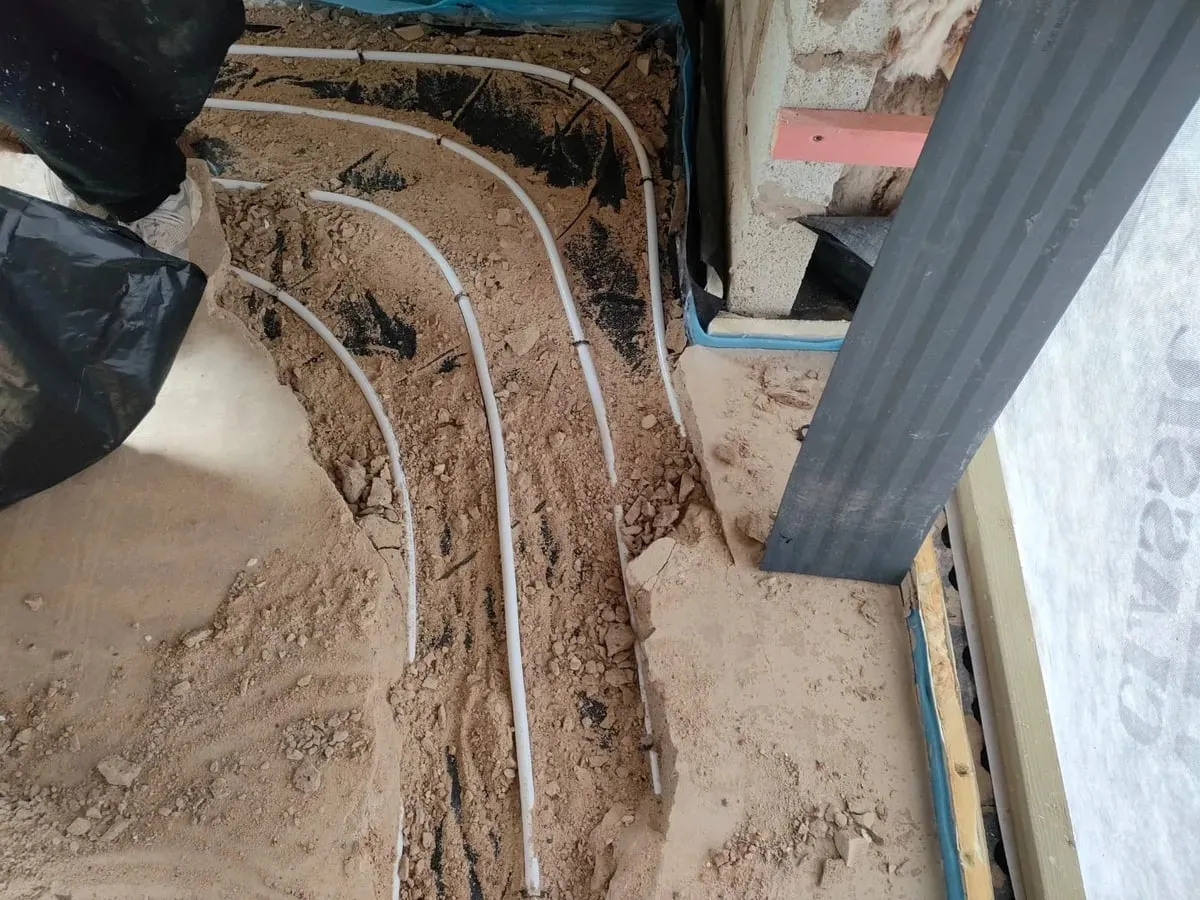
The house has underfloor heating throughout, laid in screed under tiles, with more pipework running in a large channel under a plastic membrane. That layout makes a leak hard to pin down.
A drainage system under the house carried the leaking water away, so it did not pool indoors. It showed up outside as a constant drip through the brickwork, and the water meter at the front moved slightly every two minutes with nothing running.
How the leak was traced
Damp meter
Readings across the boiler room floor and the water-damaged plasterboard wall showed high moisture where the pipes run.
Pressure testing
Every water supply was tested in turn. All held except the hot supply, which dropped.
Thermal imaging
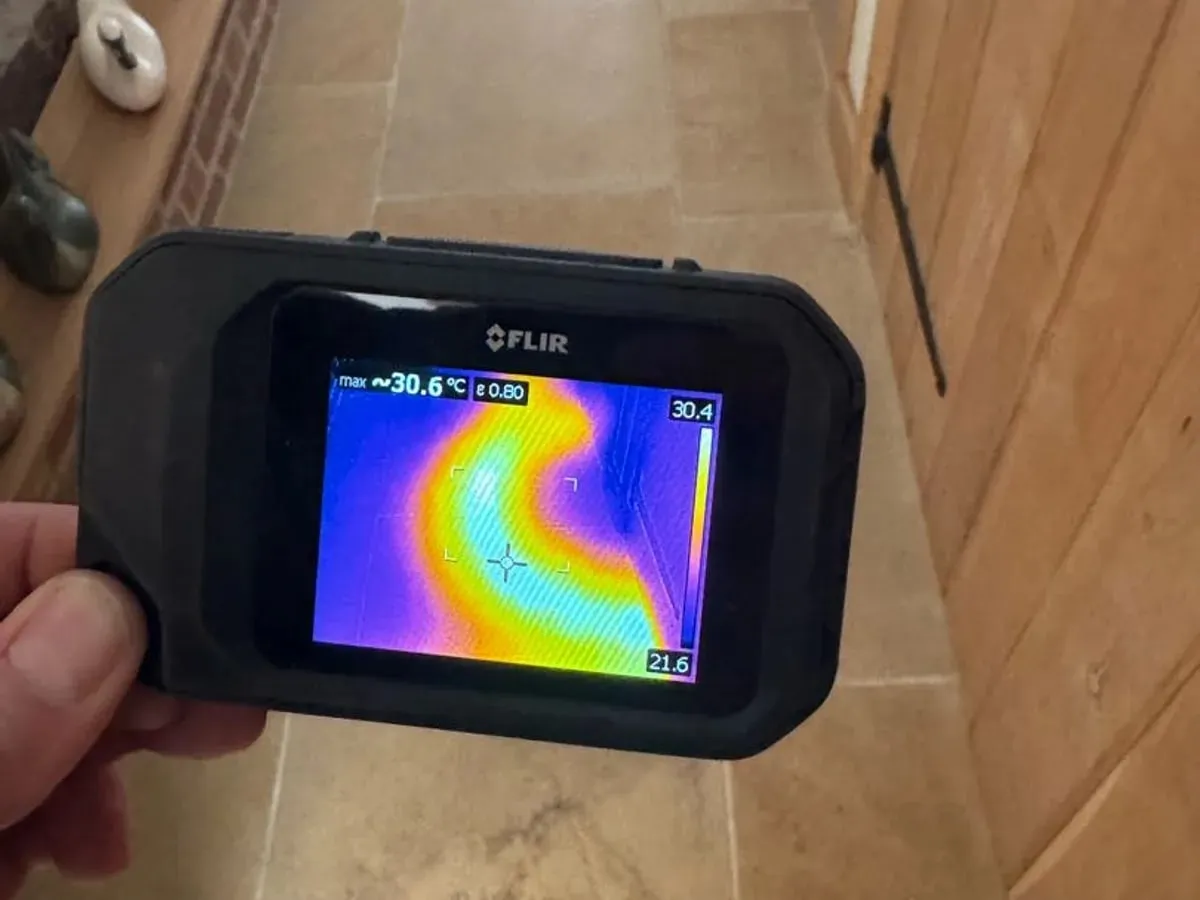
Mapped the underfloor heating circuits in the screed so they could be told apart from the hot and cold supplies in the channel.
Endoscope camera
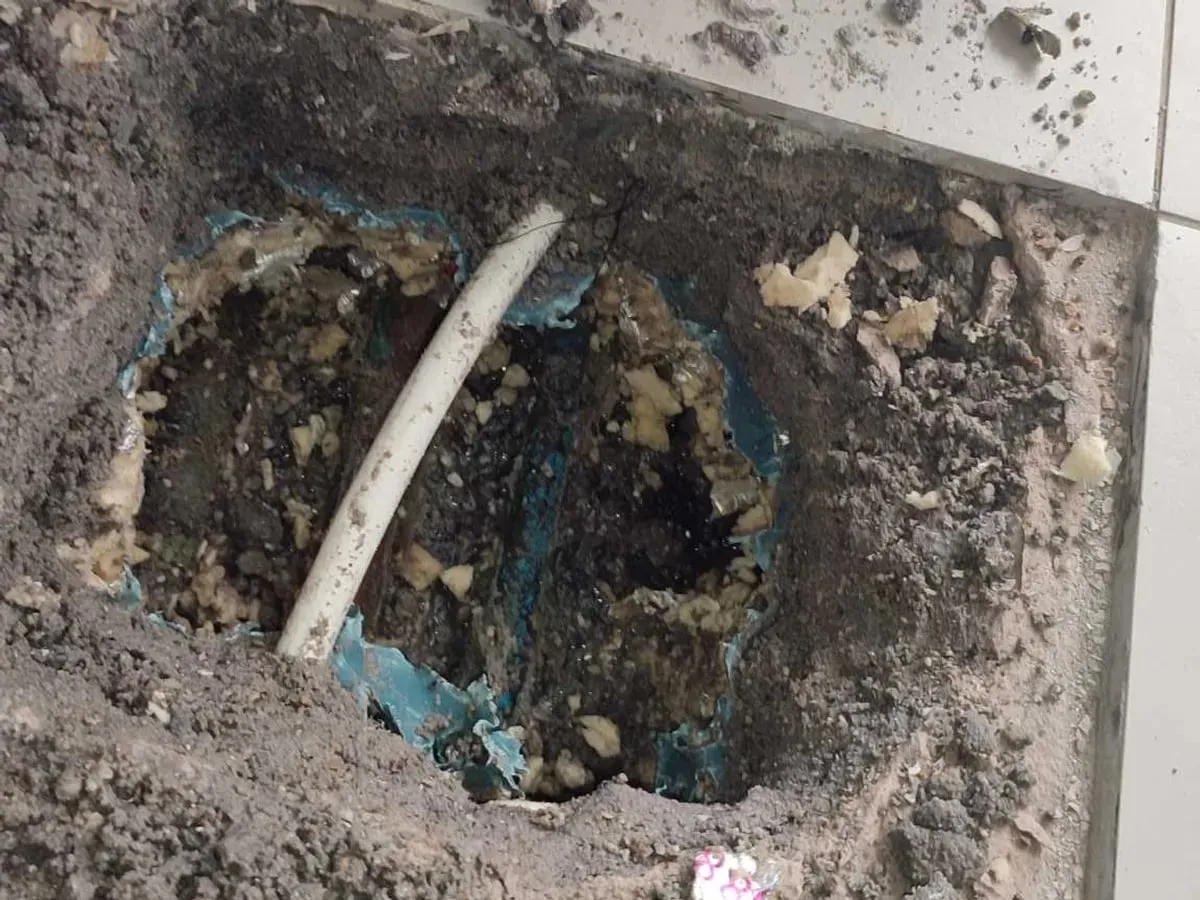
Pushed through a gap at the end of the pipe channel in the front room. It showed the sub-floor was very wet, with water spreading both ways along the channel.
Acoustic listening
Picked up leak noise behind the plasterboard wall in the boiler room.
Leak dye
Put into the waste pipes under the house. No dye appeared, which ruled them out.
What was found
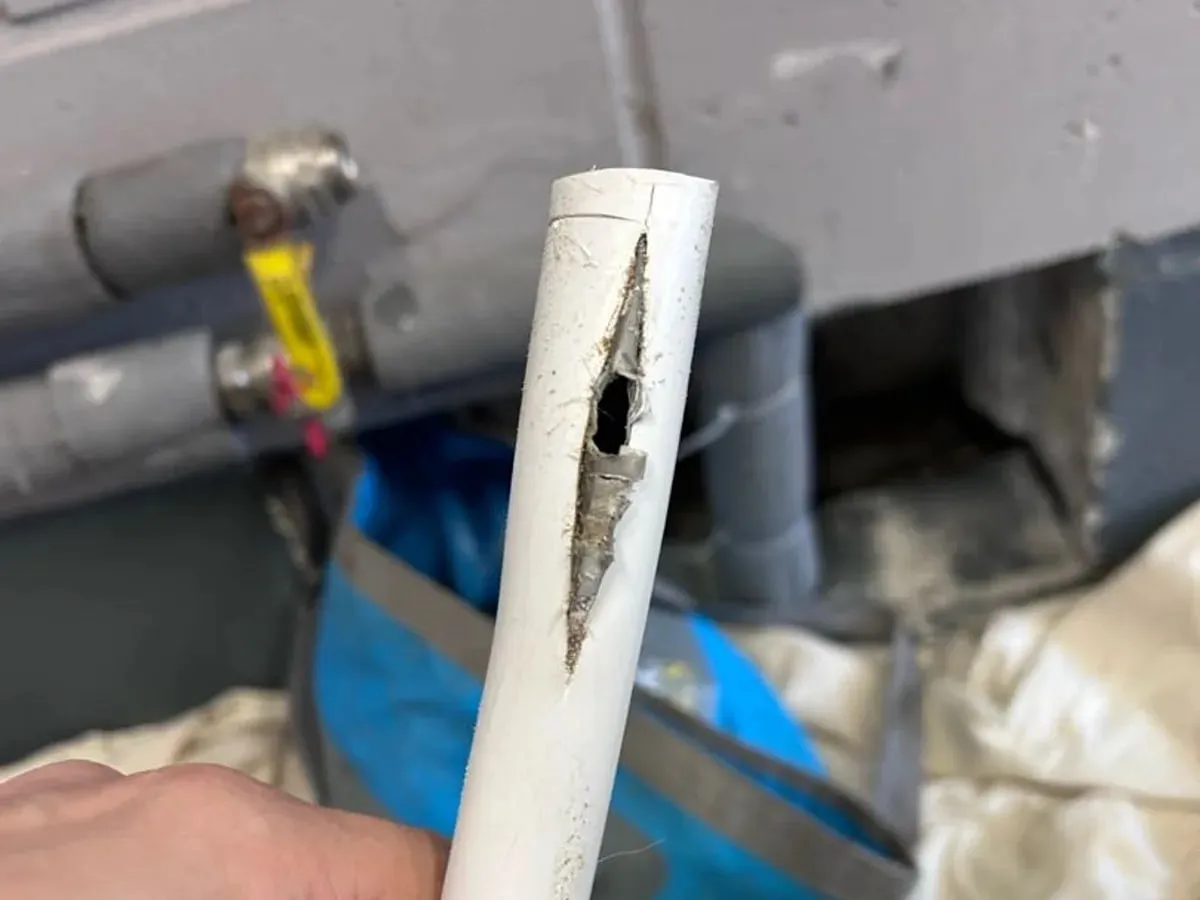
With the customer’s permission the engineer opened the boiler room wall. There was a large amount of water on the concrete floor behind it, and the leak was coming from a 22mm × 22mm × 15mm T-piece on the hot supply.
The underfloor heating pipes were not the source.
What happened next
The T-piece was replaced with a new Hep20 fitting on the same visit. A pressure test afterwards held, with no further active leaks.
Test every supply before blaming the heating
In a house full of underfloor heating it is easy to assume the heating is leaking. Pressure testing each supply separately showed the problem was on the hot water, before anyone lifted a tile.
Photos from the job
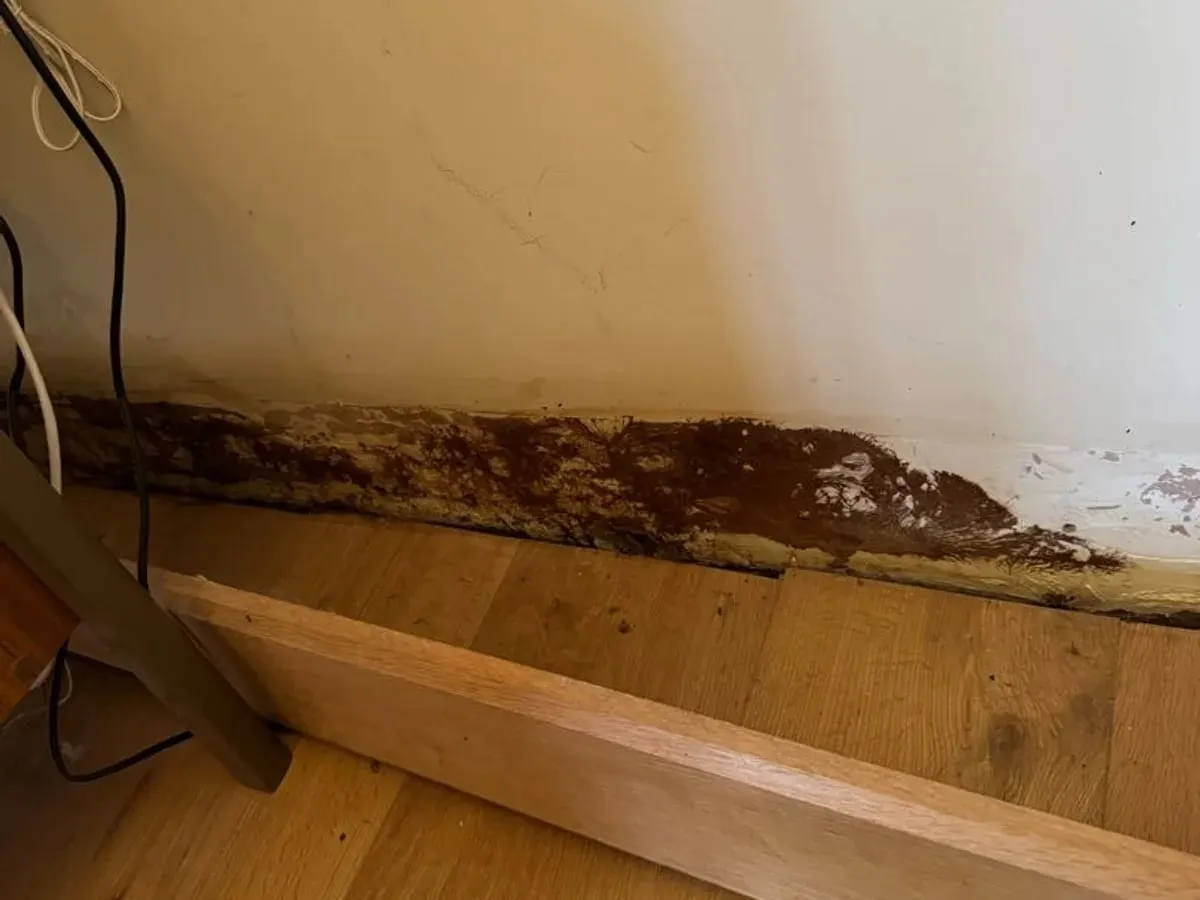
Water damage along the skirting before the investigation. 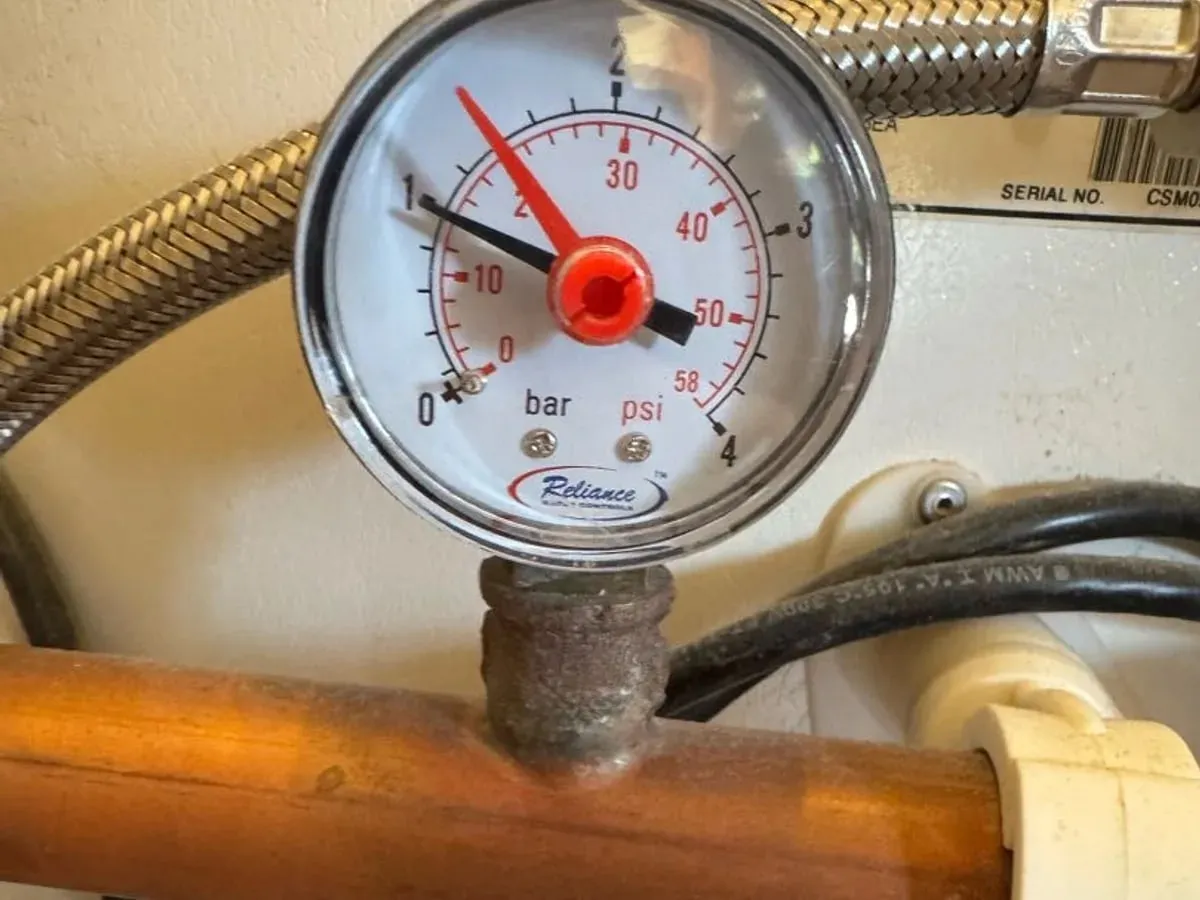
Pressure test on the hot supply, the one line that dropped. 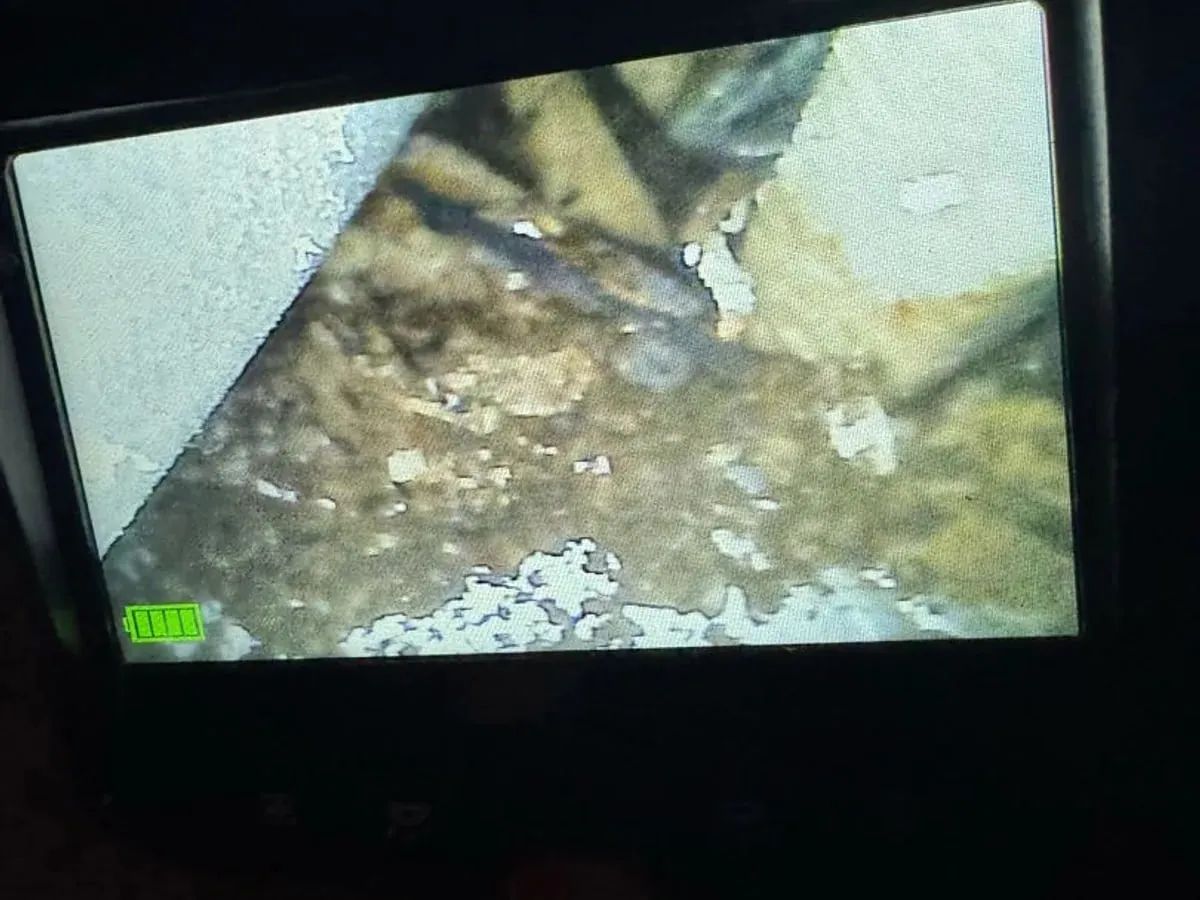
Endoscope view of the wet sub-floor channel. 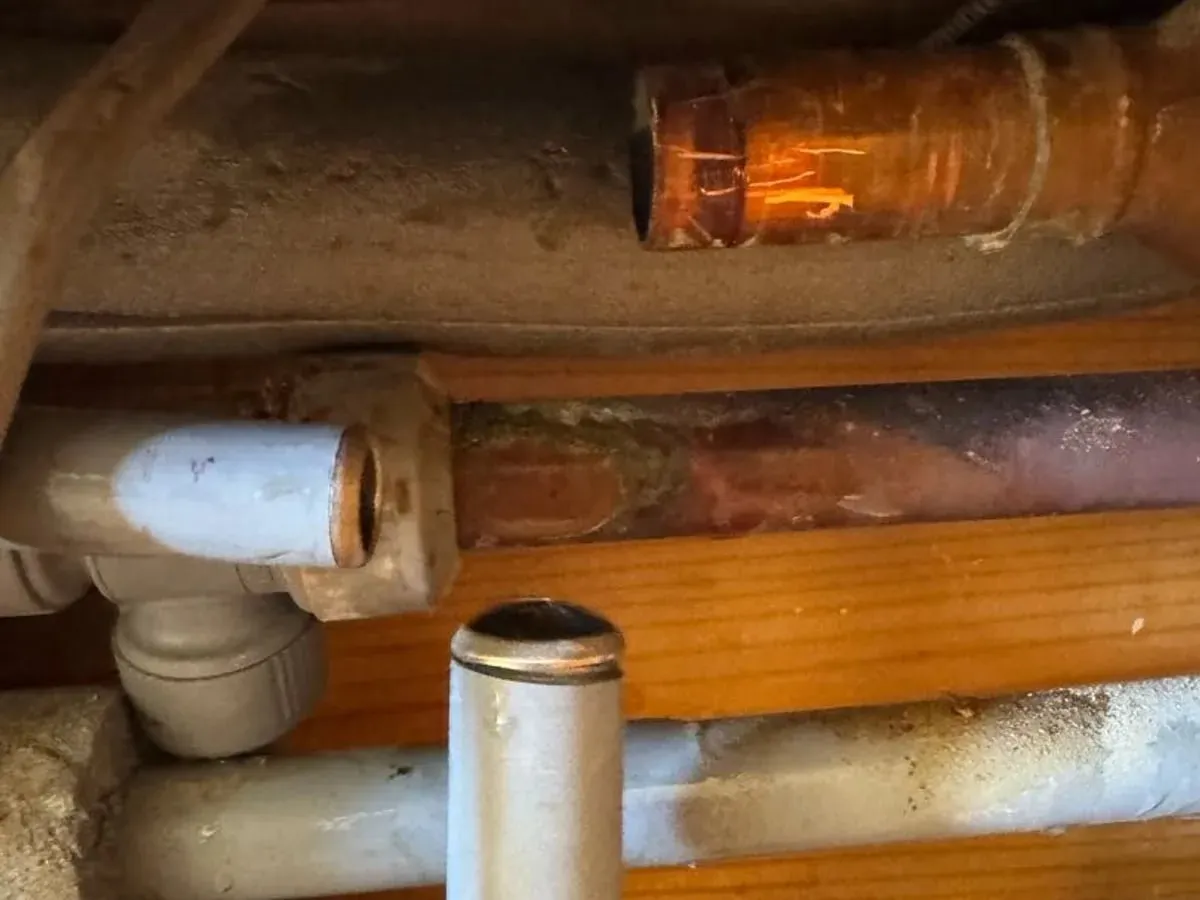
The leaking T-piece behind the boiler room wall. 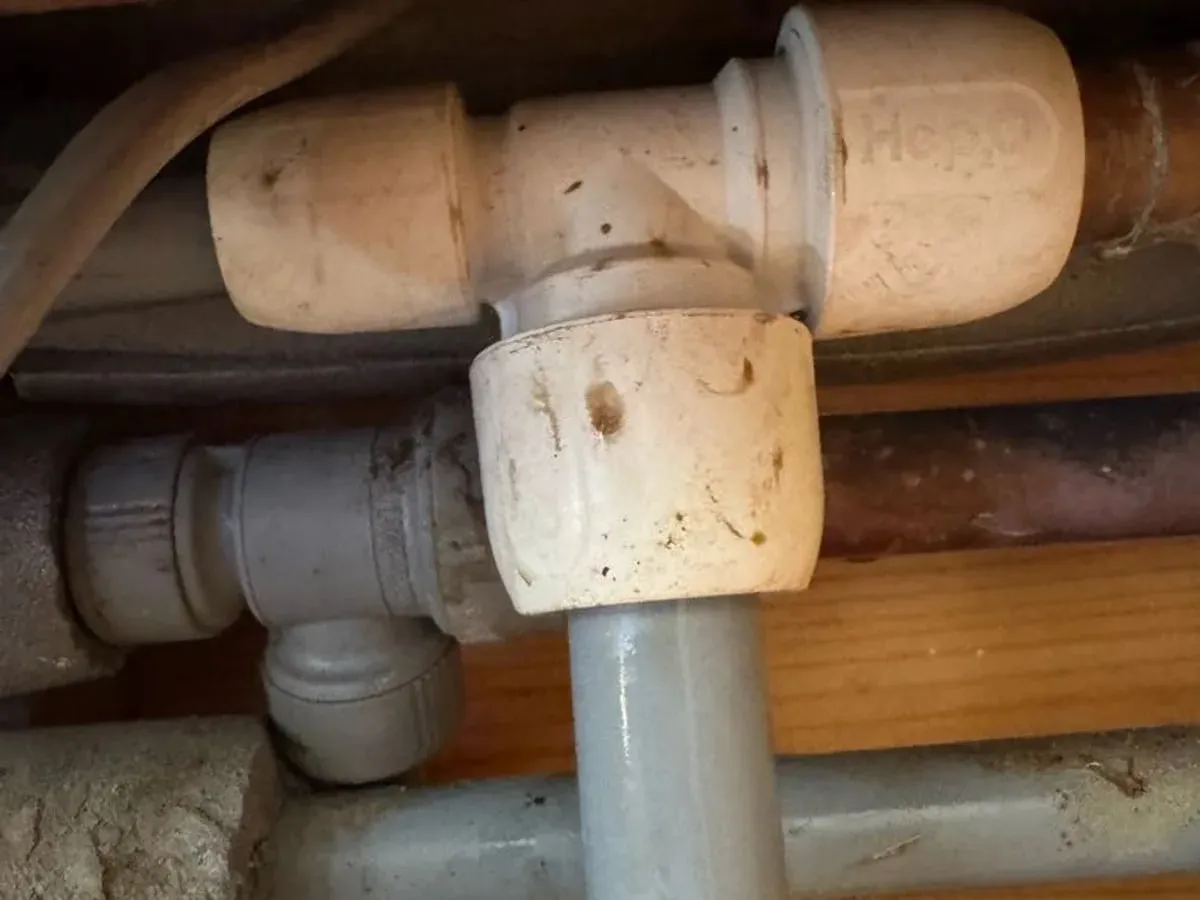
The replacement Hep20 fitting. 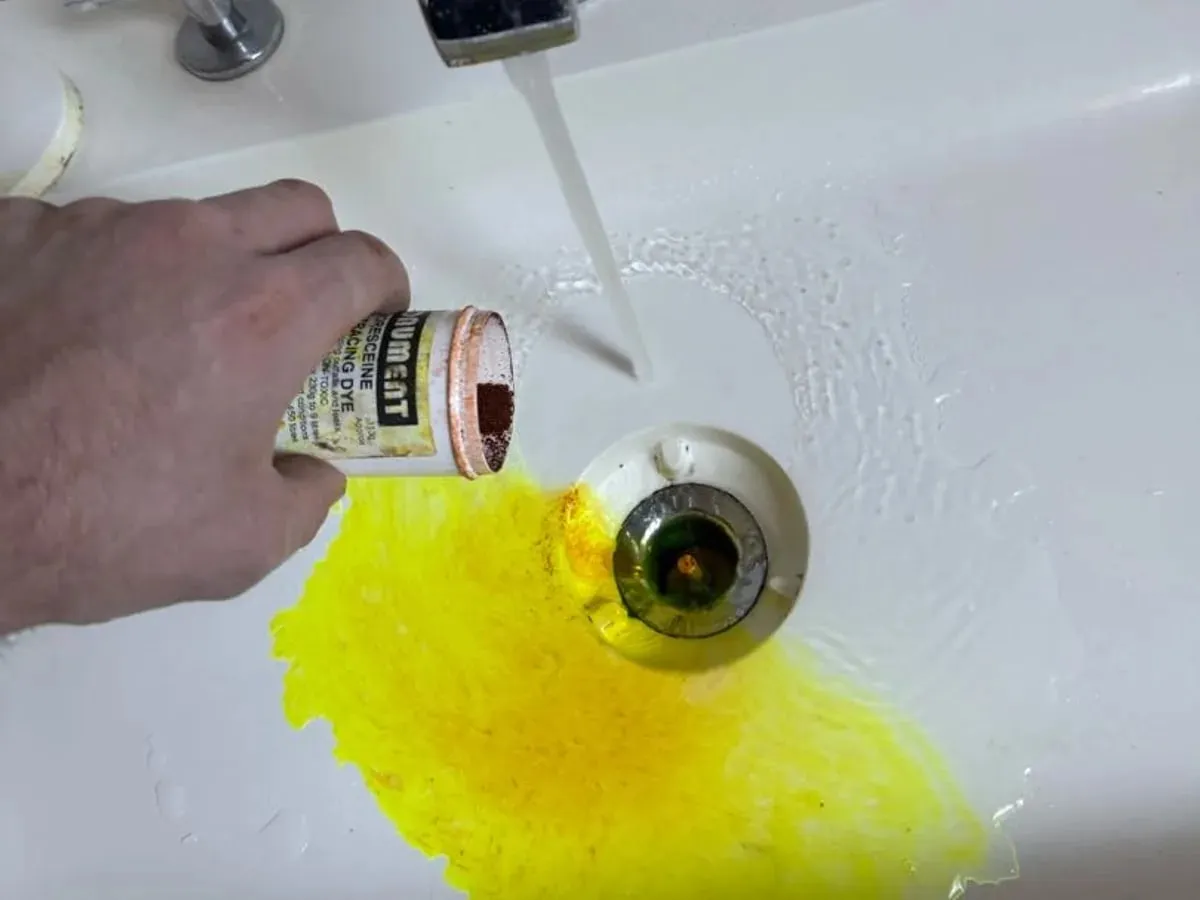
Dye test on the waste pipes, which ruled them out.
Case published by ADI Leak Detection. Photos taken by the engineer during the investigation.