Leak of up to 150 litres an hour under a kitchen screed, Burnham-on-Crouch
It looked like an underfloor heating leak. Isolation testing put it on the water softener bypass instead, and thermal, acoustic, tracer gas and moisture readings all pointed to one threshold.
- Location
- Burnham-on-Crouch, Essex (CM3)
- Property
- Large detached house
- System
- Unvented heating and hot water, underfloor heating in screed
- First sign
- Meter test showed 80 to 150 litres an hour escaping
- Engineer
- Mark Jones, ADI Leak Detection
- Outcome
- Leak found at the kitchen threshold; copper pipe replaced; retest clear
What was happening
Skirting boards and door surrounds were water-damaged and tile grout was discoloured. White salts were pushing up through the screed in the underfloor heating manifold cupboard.
Outside, a section of block paving just inside the gate had collapsed and the grass verge beyond it was waterlogged. A meter test showed between 80 and 150 litres an hour escaping.
How the leak was traced
Flow metering
Measured the loss at 80 to 150 litres an hour and confirmed the leak was active.
Isolation and pressure testing
Circuits were isolated one at a time. The leaking one was the water softener bypass supply to the kitchen, not the main underfloor heating circuits.
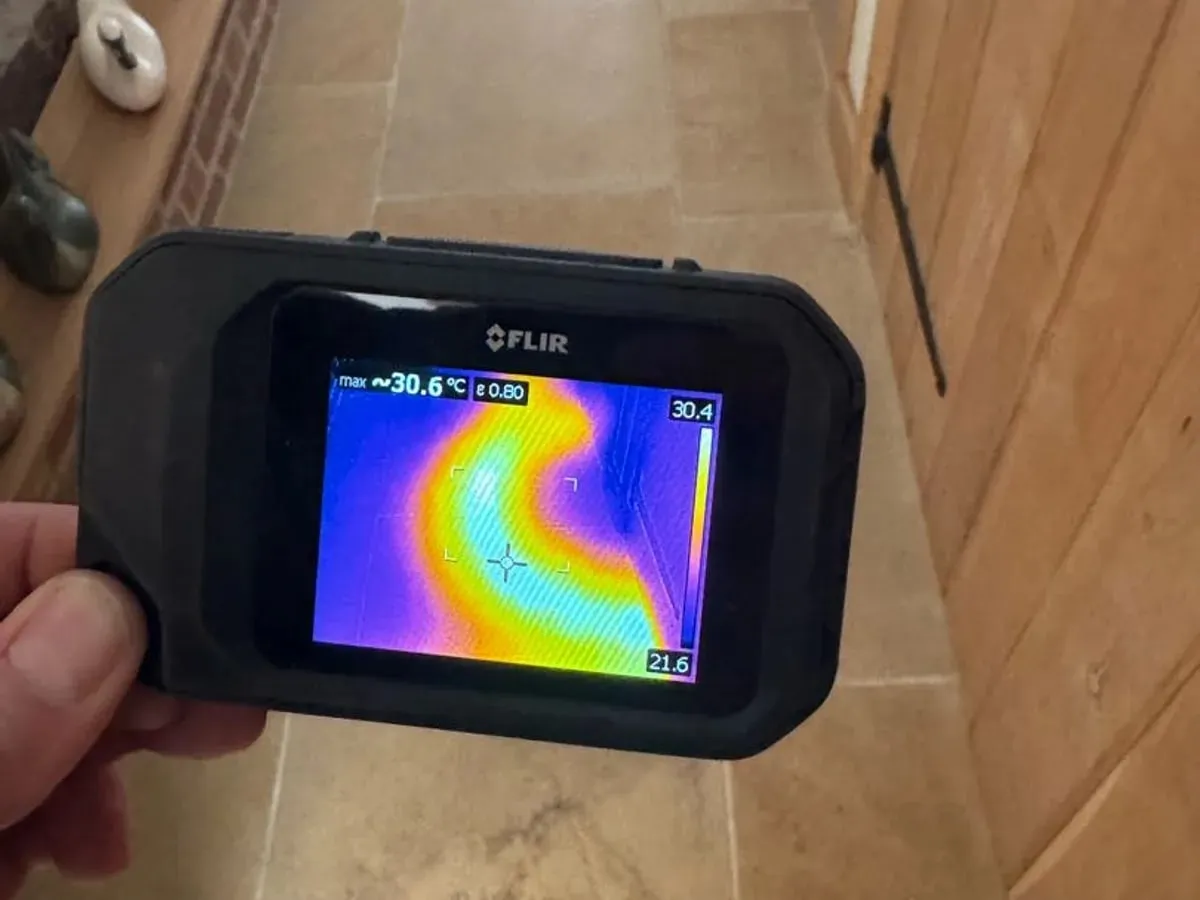
Thermal imaging
Showed a temperature anomaly at the threshold between the kitchen and the back hall.
Acoustic listening
The sound of escaping water matched the spot the thermal camera showed.
Tracer gas
Gas put into the isolated pipe came up through the screed at the same threshold.
Damp meter
Mapped moisture across the floor and skirting to separate the leak site from where the water had spread.
What was found
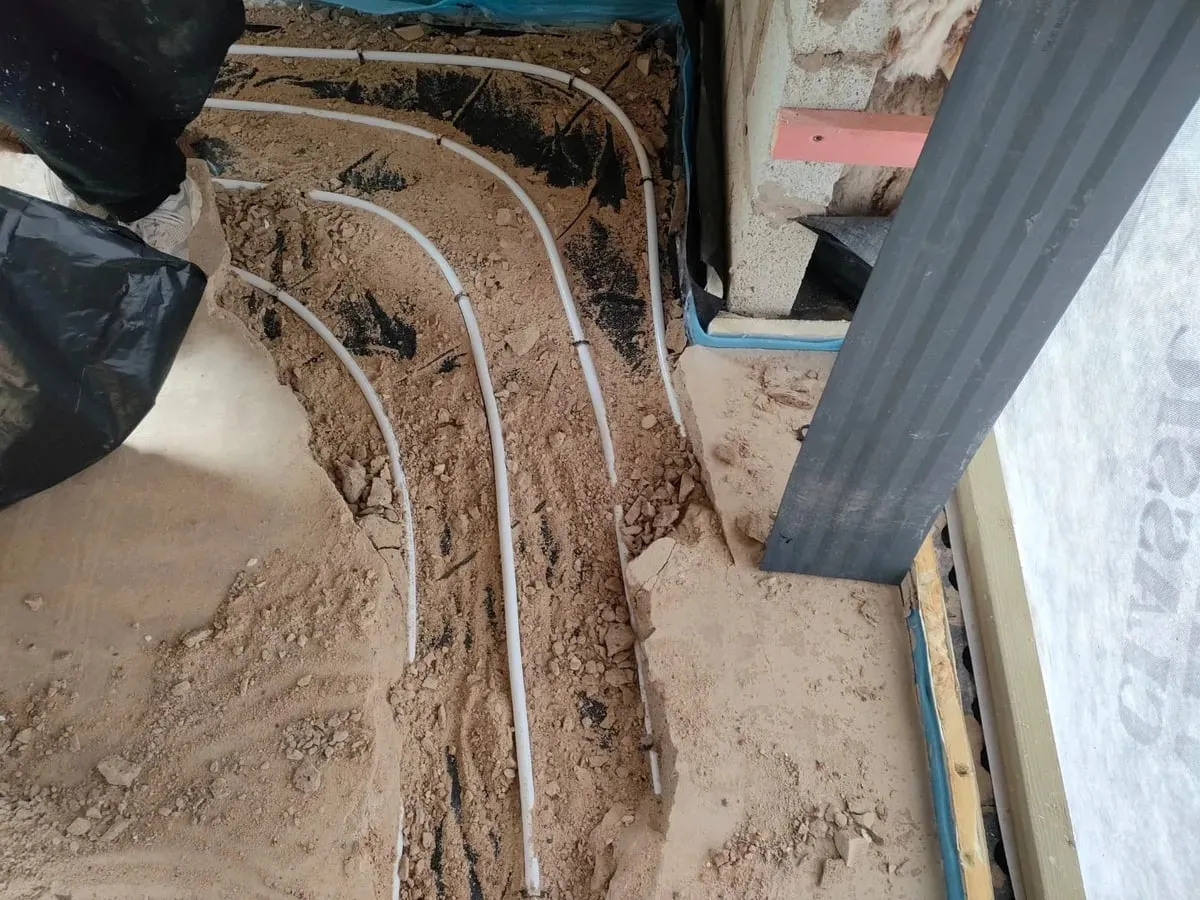
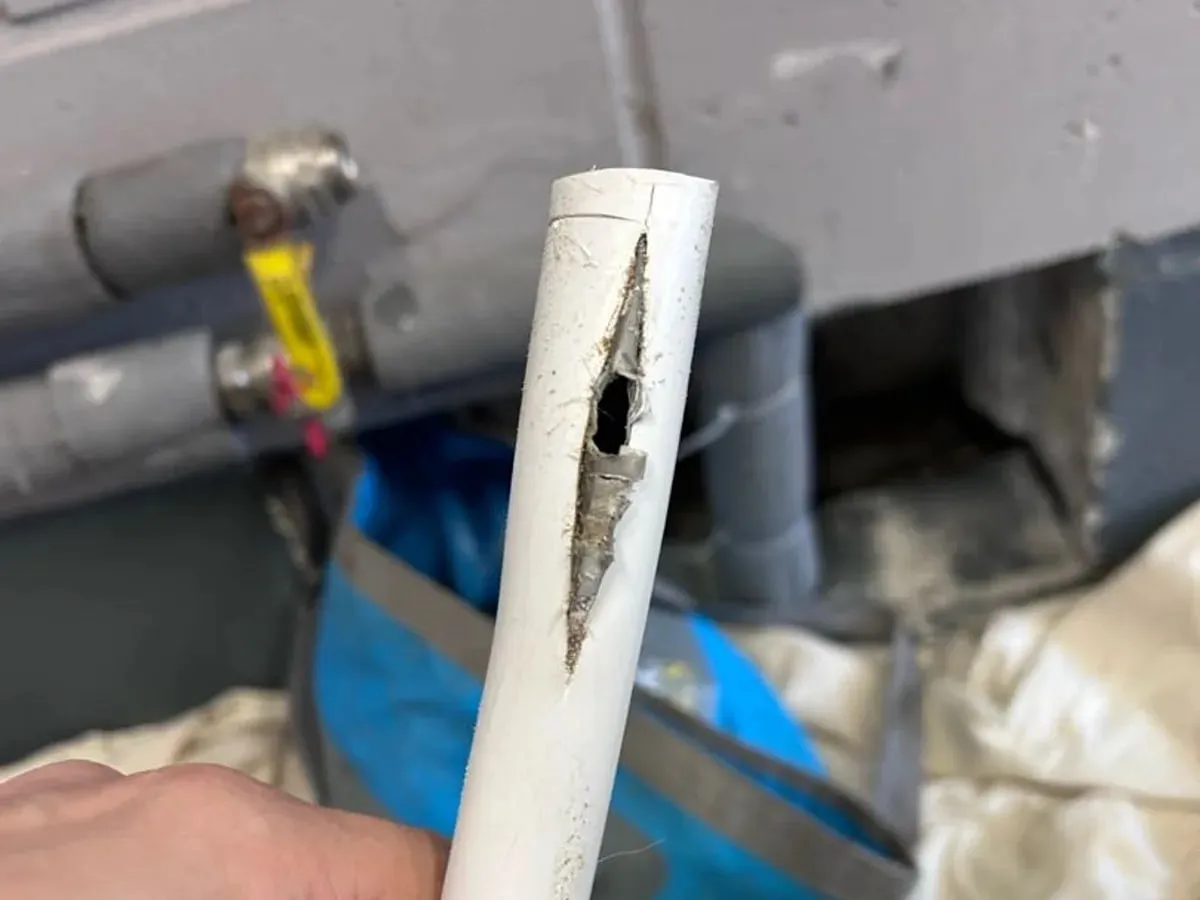
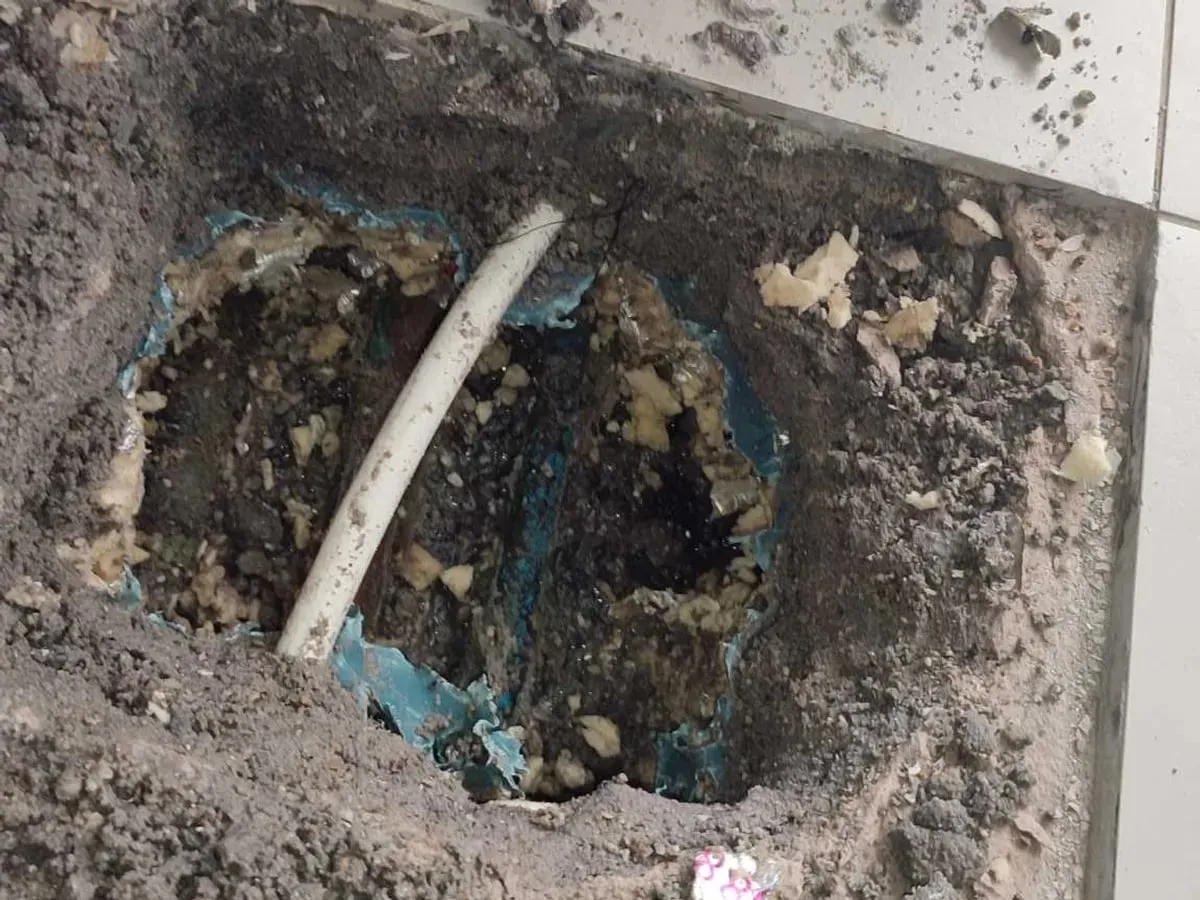
Tiles and screed were lifted at the threshold only. A damaged section of 15mm copper pipe on the softener bypass supply was the cause.
What happened next
The damaged section was replaced and the system retested with no further leak.
The buried pipes were discoloured, which suggests the leak had been going for some time. The engineer advised drying the floor as soon as possible and watching water use during the drying.
Salts at the manifold pointed the wrong way
Salts at the manifold made the heating look guilty. Isolating each circuit first moved the search to a different pipe, and four methods agreeing meant only one threshold was dug up.
Photos from the job
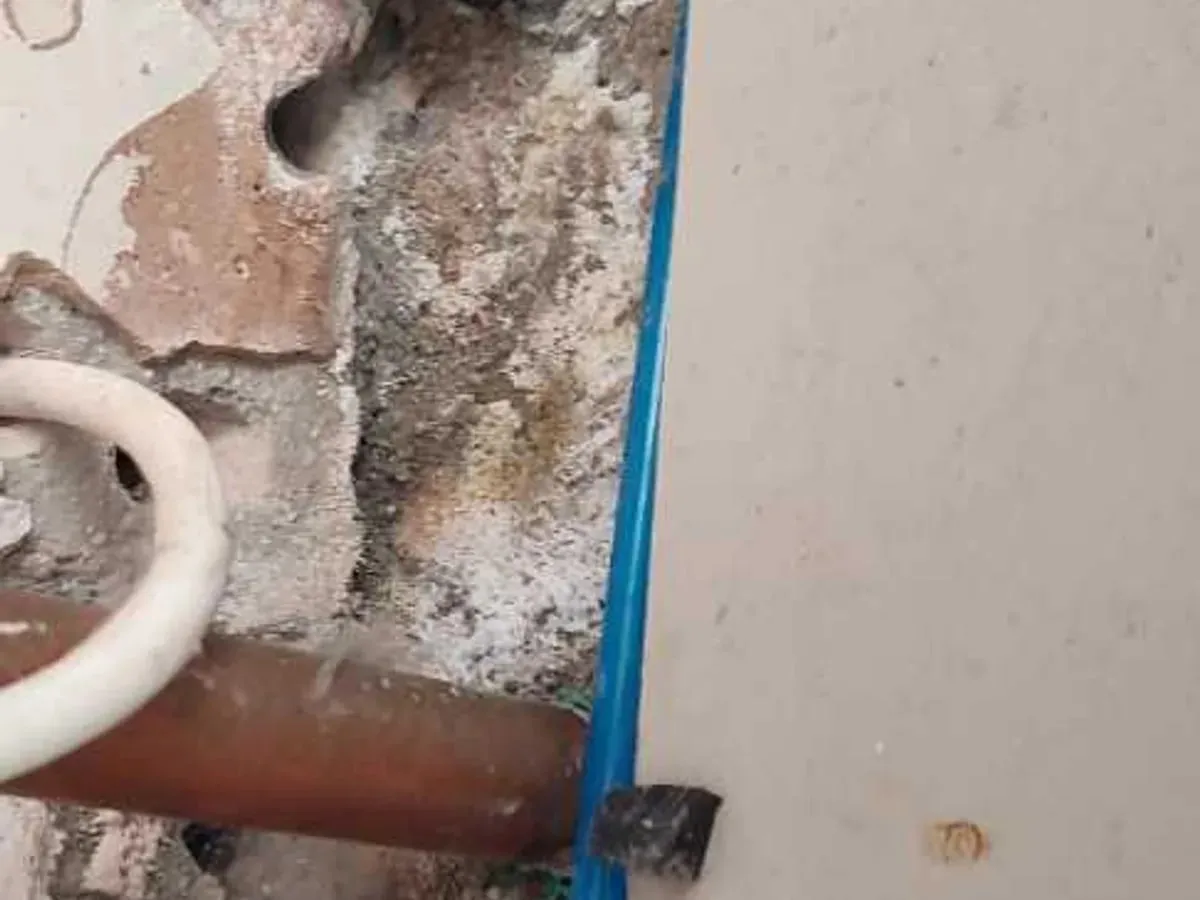
Salts coming through the screed in the manifold cupboard. 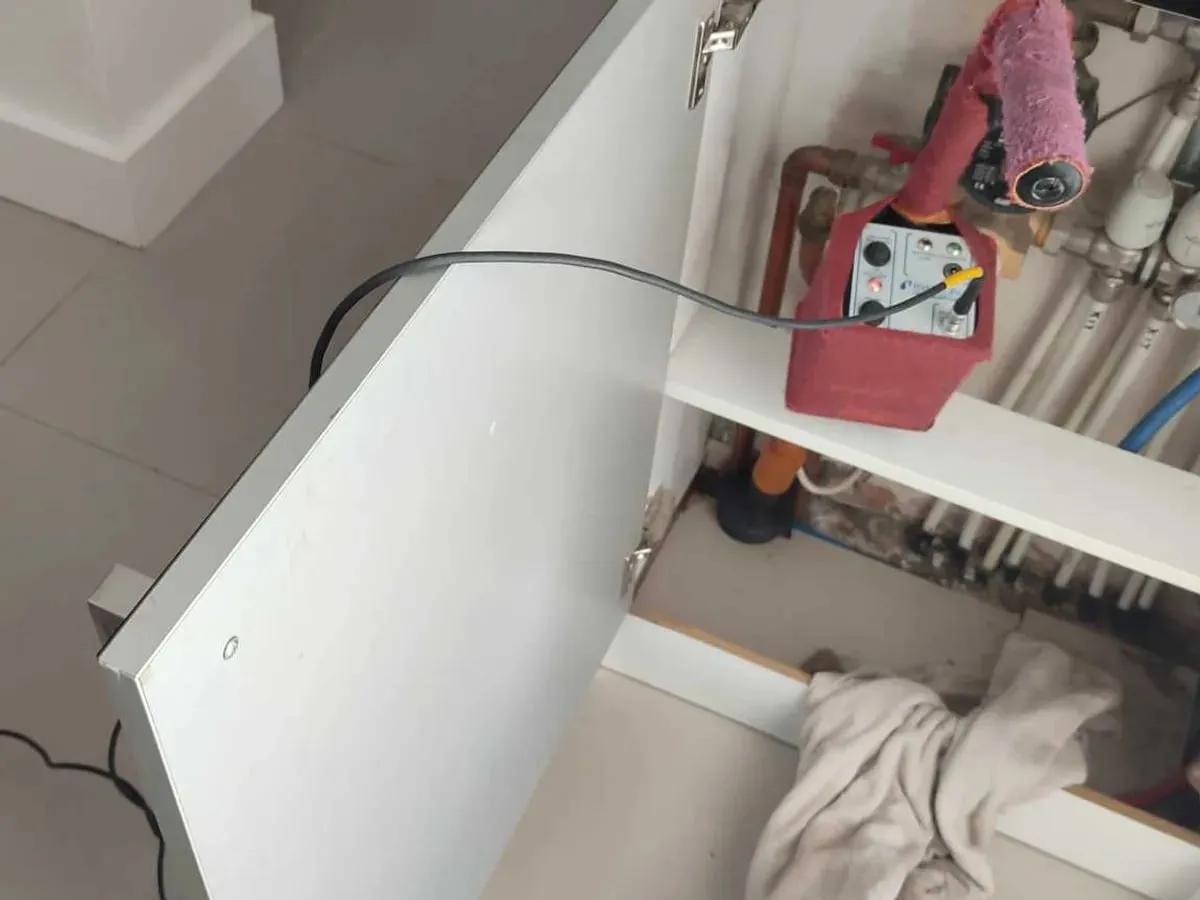
Tracer gas connected at the manifold cupboard. 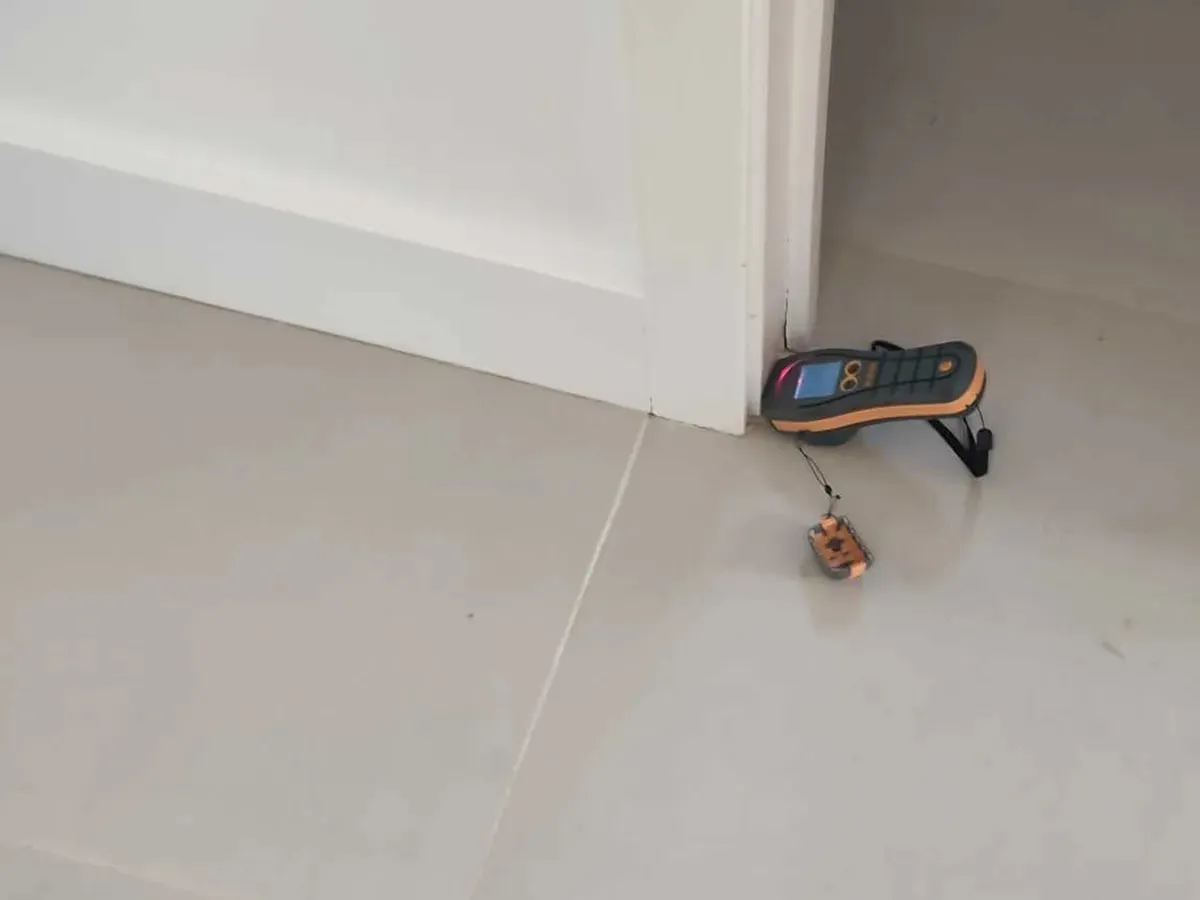
Moisture readings at the threshold. 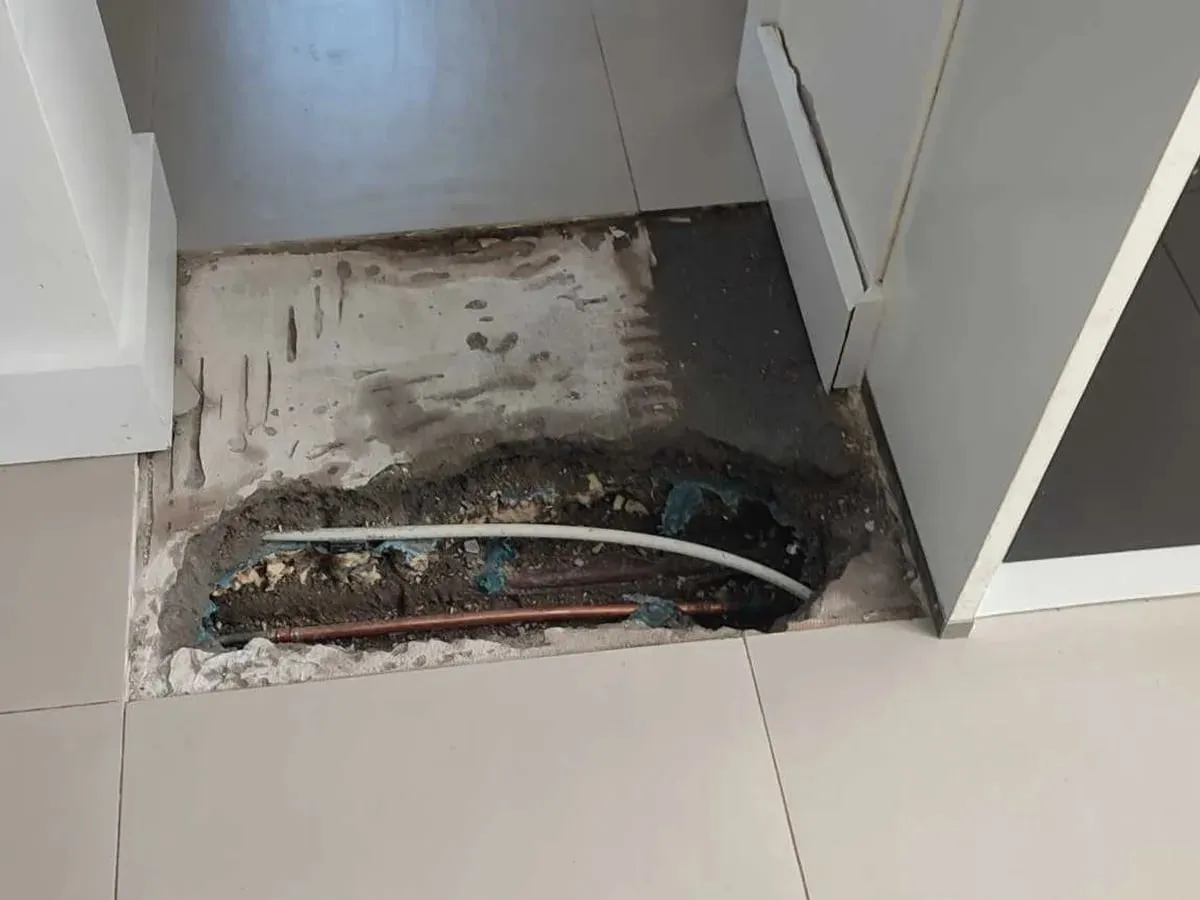
The replaced copper section before reinstatement.
Case published by ADI Leak Detection. Photos taken by the engineer during the investigation.